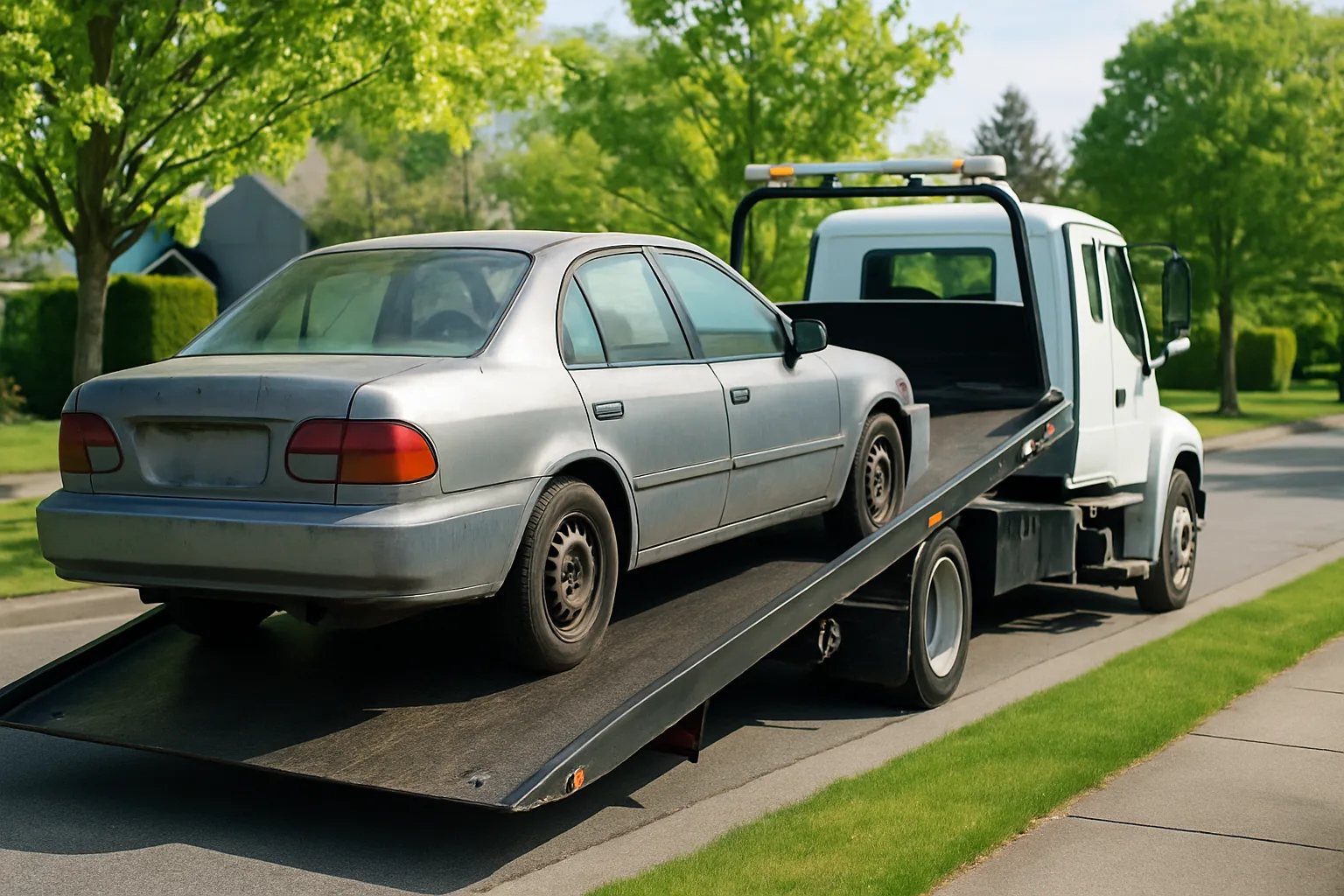
Why Your Neighbor Got More for Their Junk Car Than You Did
Two cars. Same year. Same neighborhood in Burnaby. One owner walks away with significantly more cash than the other. Sound familiar? It happens every week across British Columbia, and the reason almost always comes down to three things: make, model, and condition. Understanding how these factors drive scrap car value can mean the difference between leaving money on the table and getting a fair deal for your end-of-life vehicle.
This isn't about haggling tactics or picking the right day to call. It's about knowing what your car is actually worth — and why — before you schedule free scrap car pickup across Canada from GetMyScrapCar.
What Actually Determines Scrap Car Value in Canada
Most people assume a junk car's value is purely about weight. Heavier car, more metal, more money. That logic isn't wrong — but it's only part of the picture. Scrap buyers look at a vehicle in layers: the raw metal content, the recoverable parts, the catalytic converter, and the overall condition of the vehicle. Strip away the paint and the brand badge, and every car is essentially a mix of steel, aluminum, copper, and plastic.
But those layers don't distribute evenly across makes and models. A full-size pickup truck carries far more steel than a compact sedan. A luxury SUV with a larger catalytic converter holds more platinum group metals than a base-trim economy car. Platforms like SMASH Recycling — where verified buyers bid on your metal understand these distinctions clearly — and that competitive bidding process is exactly why sellers get better price discovery than a single phone call to a local yard ever delivers.
Here's what actually moves the needle on scrap car pricing:
- Curb weight — Heavier vehicles contain more recyclable steel
- Catalytic converter value — Varies dramatically by make and engine type
- Aluminum content — Newer vehicles and certain makes use more aluminum, which commands a higher price per pound than steel
- Recoverable parts — High-demand models with usable components fetch more
- Drive condition — Running vehicles often attract stronger bids
- Title and keys — Affect logistics, not always the final payout
How Make and Model Impact Junk Car Removal Burnaby Quotes
Not all makes are created equal when it comes to scrap value. Japanese brands like Toyota and Honda hold strong demand for used parts — even in wrecked or aged vehicles, engines, transmissions, and body panels from high-mileage Corollas and Civics move quickly through the used parts market. That demand filters directly into what a buyer will offer for the whole car.
Domestic trucks and full-size SUVs benefit from sheer mass. A half-ton pickup can weigh 4,500 to 5,500 pounds — that's a lot of steel. Even a truck with a dead engine and a blown transmission contains several hundred pounds of recyclable material beyond the body panels. In the Burnaby and broader Metro Vancouver area, where trucks are common work vehicles, buyers see these regularly and price them accordingly.
Luxury vehicles sit in their own category. Higher-end European models often carry larger catalytic converters loaded with precious metals. The platinum, palladium, and rhodium inside a catalytic converter from a high-end V8 can be worth considerably more than what's in a four-cylinder economy car. That gap in cat value alone can shift a quote by a noticeable margin — and it's one of the reasons two cars of similar age can receive very different offers.
Condition: The Variable That Changes Everything
Condition is where most sellers get surprised. A car that runs and drives — even poorly — is worth more than an identical car that doesn't start. Why? Because a running vehicle is easier to move, easier to inspect, and opens up more options for the buyer: retail the parts, send it to auction, or process it for scrap. A non-running car limits those options immediately.
That said, non-running vehicles still have real value. Don't assume your car is worthless because it won't start or has been sitting in your driveway for two years. Scrap metal recycling Canada-wide handles millions of non-running vehicles every year. The important thing is being accurate about the condition when you request a quote. Misrepresenting a car's state — claiming it runs when it doesn't — can result in a revised (lower) offer at pickup time.
Key condition factors buyers assess:
- Does it run and drive? — Biggest single condition factor
- Is the catalytic converter intact? — Stolen or missing cats significantly reduce value
- Are major components present? — Engine, transmission, wheels, and battery all matter
- How much body damage? — Affects part salvageability
- Rust level — Heavy rust reduces usable metal quality
- Interior condition — Less relevant for scrap, but matters for part resale
Cash for Cars No Title No Keys — What You Need to Know
One of the most common questions we hear: "I don't have the title. I lost the keys years ago. Can I still sell my car?" The short answer is yes — in many cases. Cash for cars no title no keys scenarios come up regularly across British Columbia, and experienced buyers have processes for handling these situations.
In British Columbia, proof of ownership requirements vary depending on the buyer and the vehicle's status. A registered auto recycler typically needs to verify ownership through ICBC records, a bill of sale, or statutory declaration in situations where the title is unavailable. The process takes a little more paperwork but it's not a dealbreaker. Missing keys are even simpler — tow trucks don't need them.
What you should never do is try to sell a vehicle you don't own or that has a lien attached without disclosing it. Beyond the obvious legal issues, it creates problems that follow you long after the car leaves your driveway. Be upfront about the documentation situation when you get your quote. A legitimate buyer will walk you through the options — and schedule your free scrap car removal without making the process unnecessarily complicated.
How SMASH Brings Transparency to Scrap Car Pricing
Here's the old way of selling a scrap car: you call one buyer, they give you a number, you have no idea if it's fair. You take it because you don't have the time or energy to call twelve different yards. That single-buyer model has always favored the buyer, not you.
SMASH flips that dynamic. The SMASH scrap metal auction platform connects sellers with vetted buyers who compete for loads. More buyers means better price discovery. Competition can help reveal the market in a way that a single cold call never will. For yards and recyclers processing vehicles at volume, SMASH handles inventory documentation, photo records, and auto-invoicing — taking the paperwork burden off operators so they can focus on the metal.
If you're a yard operator in British Columbia processing end-of-life vehicles at scale, understanding platforms like SMASH and how competitive bidding works for your recovered metals matters. The difference between one buyer and five buyers bidding on the same non-ferrous load is real money. You can read more junk car removal guides on the GetMyScrapCar blog to understand how the ecosystem from vehicle removal to metal processing actually works.
Getting the Best Value for Your Scrap Car in Burnaby
If you're a vehicle owner in Burnaby ready to part ways with a junk car, a few steps will help you maximize what you receive. First, gather whatever documentation you have — registration, title, bill of sale. Second, be honest and specific about the car's condition. Third, don't strip parts yourself unless you know exactly what you're doing — removing a catalytic converter incorrectly, for example, can lower your overall quote more than the cat itself was worth.
Timing also plays a role. Scrap metal prices fluctuate with global commodity markets — steel, aluminum, copper, and precious metals all move based on demand from manufacturers, construction activity, and international trade conditions. Prices mentioned in any scrap car quote are subject to market fluctuation — always confirm current rates at the time of pickup. The quote you receive today may differ from what the market supports in 60 days.
The simplest move is to get your quote, understand what's driving the number, and act when the timing works for you. If your car has been sitting unused, it's costing you in registration fees, insurance, and driveway space. That ongoing cost is easy to overlook when you're busy — but it adds up.
Ready to find out what your car is actually worth? Get a free quote for your scrap car in Canada and schedule your free scrap car removal at getmyscrapcar.ca. No pressure, no hidden fees, and free towing included.
Frequently Asked Questions
Q: How much is a scrap car worth in Burnaby right now?
Scrap car values in Burnaby depend on the make, model, weight, and current condition of the vehicle. Commodity prices for steel and non-ferrous metals fluctuate regularly, so the best way to get an accurate number is to request a quote directly. General market rates shift based on global demand — always confirm pricing at the time of your pickup.
Q: Can I get free scrap car pickup in Burnaby without a title?
Yes, in many cases. Missing titles are common, especially for older vehicles or inherited cars. In British Columbia, buyers can often verify ownership through ICBC records or a statutory declaration. Contact GetMyScrapCar directly and explain your documentation situation — the team will walk you through what's needed.
Q: Does my car need to run for junk car removal in Burnaby?
No. Non-running vehicles are picked up every day across Burnaby and the broader Metro Vancouver area. Tow trucks handle vehicles in any condition — flat tires, no battery, seized engine. Running condition does affect the quote, but a non-running car still has real scrap and parts value.
Q: Why does my catalytic converter affect the scrap car quote so much?
Catalytic converters contain platinum, palladium, and rhodium — precious metals with significant market value. The amount varies by vehicle make, model, and engine size. A missing or stolen catalytic converter will reduce your quote, sometimes noticeably, because that recoverable value is no longer present.
Q: How does SMASH help with scrap car metal pricing?
SMASH is a scrap metal auction platform that connects recyclers and buyers through competitive bidding. For vehicle owners, this matters because the yards and recyclers processing your car use platforms like SMASH to sell recovered metals — and better pricing downstream can support stronger quotes at the vehicle level. More competition in the metal market generally means better price discovery across the whole chain.
Stay current on scrap metal markets and recycling industry news — follow SMASH on LinkedIn for regular updates on metal prices, auction activity, and trends across the North American recycling industry.