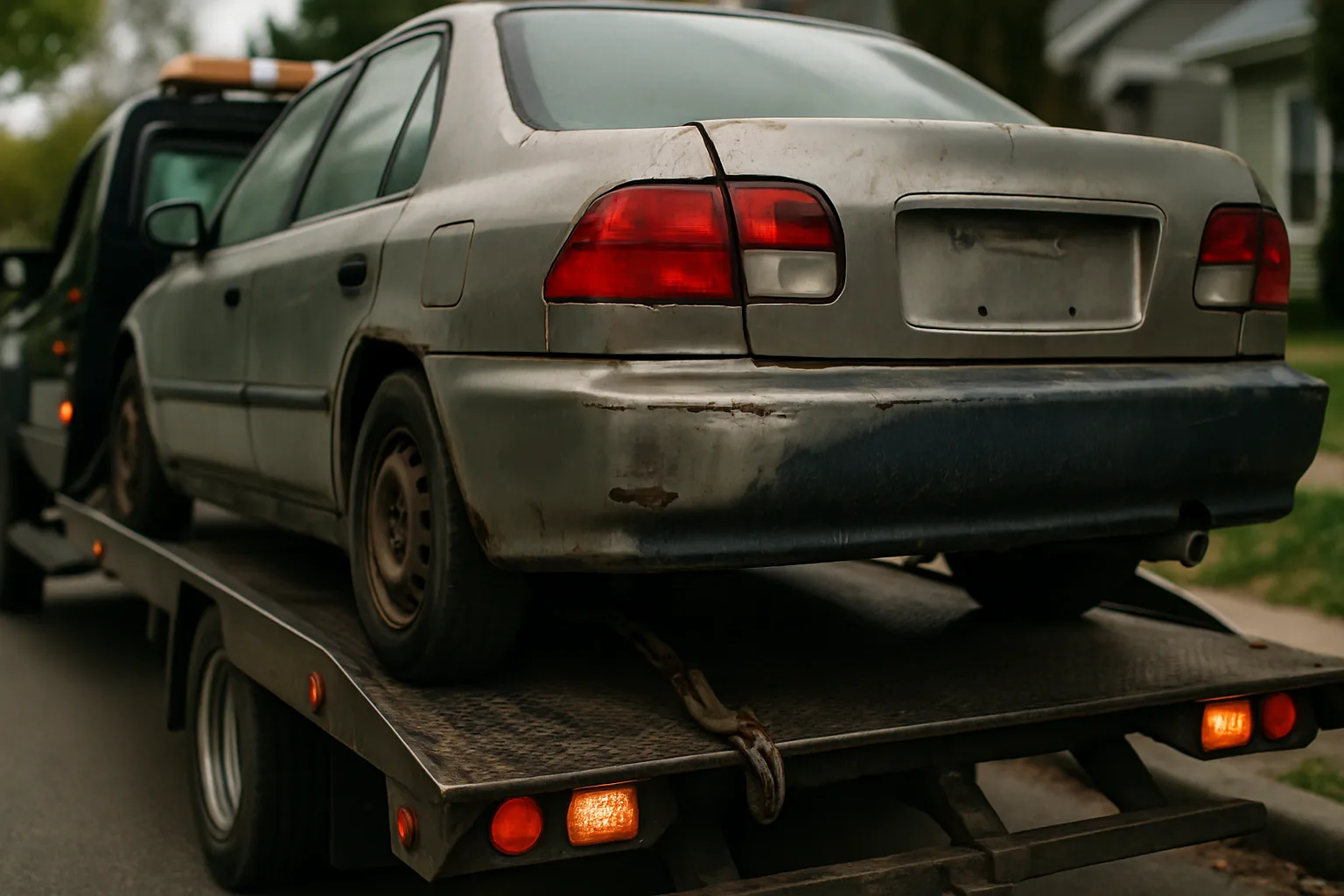
Most people assume a junk car is worth the same no matter what it is. It isn't. The difference between a 2009 Honda Civic and a 2009 Ford F-150 sitting in the same driveway — same rust, same dead engine — can be hundreds of dollars. If you're trying to sell my car fast Saint John, understanding why that gap exists puts more money in your pocket.
Scrap car prices are not random. They follow real variables: how heavy the vehicle is, what metals are inside it, whether parts are still sellable, and what buyers in your area are actually paying this week. Let's break down exactly what drives value — and how to make sure you're not leaving cash behind.
Why Make and Model Actually Matter in Scrap Pricing
Your car's make and model determine two big things: raw weight and parts demand. A half-ton pickup truck can weigh over 4,500 lbs. A compact sedan might come in under 2,800 lbs. Since scrap yards pay by weight for steel, that difference alone is significant before you factor in anything else.
Parts demand adds another layer. Vehicles with large ownership bases — popular trucks, common Japanese imports, fleet vehicles — generate steady demand for used components. A working alternator or a solid catalytic converter pulled from a high-mileage Accord or Tacoma is worth real money to an auto recycler. That parts value gets factored into what a buyer will offer you upfront, even if they plan to crush the rest.
- Heavy trucks and SUVs — More steel, more weight, higher base scrap value
- Common domestic and import models — Higher parts demand, better buyout offers
- Rare or discontinued models — Less parts demand, often valued closer to pure scrap weight
- Diesel vehicles — Engines and components often carry higher secondary value
Platforms like SMASH Recycling connect scrap sellers with vetted buyers who bid competitively on loads — that kind of market transparency is exactly what individual sellers rarely get when they call a single yard.
How Vehicle Condition Changes the Math
Condition affects scrap pricing in two distinct ways: it changes whether parts can be harvested, and it affects how easy the vehicle is to process. A car that runs — even poorly — opens up more value recovery options than a rusted shell that needs specialized equipment just to load.
Here's what buyers are actually evaluating when they look at your vehicle:
- Catalytic converter status — Still intact? Worth considerably more. Missing or damaged? That value is gone.
- Engine and drivetrain condition — Seized or fire-damaged components reduce value. A recently dead engine with intact accessories holds more.
- Body rust and structural integrity — Surface rust affects looks. Frame rot affects how the vehicle can be moved and processed.
- Fluid contamination — Significant oil, coolant, or fuel leaks may reduce offers or require environmental handling.
- Completeness — A car missing wheels, a hood, or the battery is worth less than the same car intact.
None of this means a damaged or incomplete vehicle has no value — it almost always does. It just means the offer reflects the real cost to process it. Knowing this going in keeps expectations realistic and negotiations honest.
Scrap Metal Prices Today: The Weekly Variable Nobody Talks About
Even if your vehicle hasn't changed, your scrap car value can shift week to week. Scrap metal prices today are tied to global steel and commodity markets. When steel mill demand rises — driven by construction activity, manufacturing output, or export demand — shredder operators pay more for feedstock. When demand softens, prices follow.
This is the variable most sellers underestimate. A difference of $20–$40 per ton in steel pricing doesn't sound dramatic until you apply it to a 3,000 lb vehicle. The market moves constantly, and timing your sale during a stronger pricing window — or at minimum understanding where prices are trending — matters.
Non-ferrous metals inside your vehicle add another dimension. The platinum group metals inside a catalytic converter (platinum, palladium, rhodium) are among the most volatile commodities on the market. A single week's swing in palladium pricing can meaningfully change what a cat is worth. The same logic applies to aluminum wheels, copper wiring, and brass fittings.
Disclaimer: Scrap metal prices fluctuate based on market conditions. Always check current rates before accepting an offer — prices referenced here are general context, not quotes.
What Sellers in Saint John and New Brunswick Should Know
Geography shapes your options in ways that aren't obvious. If you're looking to sell my car fast in Saint John, you're working within a regional market that has its own dynamics. Processing capacity, buyer competition, and logistics costs all affect what a local yard can realistically offer compared to a major urban center.
That said, Saint John has an active recycling and automotive sector. The city's industrial history and port access mean there's real infrastructure supporting metal recovery here. New Brunswick as a whole has regulations around vehicle disposal that require proper deregistration and documentation — make sure whoever picks up your vehicle provides a proper bill of lsale and handles the paperwork correctly.
A few practical points for New Brunswick sellers:
- Have your vehicle registration ready — most buyers require it at pickup
- Remove personal belongings before the tow truck arrives
- Cancel your insurance after the vehicle is picked up and documented
- Confirm the buyer handles the Service New Brunswick deregistration process or that you're provided the paperwork to do it yourself
For Saint John scrap metal services, working with a buyer who knows local compliance requirements saves headaches. The last thing you want is liability on a vehicle you thought you'd sold.
If you're ready to move forward, schedule your free scrap car removal and get a real offer based on your actual vehicle — not a generic number pulled from a calculator.
How to Get a Better Offer: What Actually Moves the Number
You can't change what your car weighs or what steel is trading at today. But there are things within your control that affect the offer you receive.
1. Don't strip it before you sell it. Removing your battery or wheels thinking you'll get more for them separately often backfires. Buyers value complete vehicles differently, and pulling components can reduce your offer more than those parts are worth sold separately — especially if it costs the yard more to process an incomplete unit.
2. Keep the catalytic converter on. Catalytic converters are consistently one of the highest-value components on an end-of-life vehicle. If yours is still attached and intact, that's significant value. Let the buyer assess it properly rather than removing it yourself — both for safety and for the offer you receive.
3. Get more than one offer. This is the single biggest thing sellers underestimate. Calling one yard and accepting the first number is the old way. Competition changes what buyers are willing to pay. Sell your scrap metal on SMASH Recycling to see what competitive bidding actually looks like — more buyers means better price discovery, full stop.
4. Have your documentation ready. A clean title and current registration give buyers confidence. Vehicles with unclear ownership histories attract lower offers — or no offer at all.
5. Be accurate about condition. Don't oversell the vehicle to get a higher quote, only to have the offer revised when the driver arrives. Be upfront about what's missing, what's damaged, and what the car's history is. Honest sellers get faster, smoother transactions.
For more practical guidance on maximizing your vehicle's value, read more junk car removal guides covering everything from catalytic converter values to title paperwork.
The Bottom Line on Scrap Car Value
A junk car isn't just dead weight. It's steel, aluminum, copper, platinum group metals, and potentially sellable components — all sitting in your driveway. The price you're offered reflects how all of those factors add up on the day you sell.
Make and model set the foundation. Condition adjusts the number up or down. Commodity markets shift the baseline weekly. And the number of buyers competing for your vehicle determines whether you get a fair reflection of all of the above — or just whatever the first caller decides to offer.
If you're in Saint John or anywhere across New Brunswick, you don't have to guess. Free scrap car pickup across Canada from GetMyScrapCar means no towing costs, no guesswork, and a real offer on your actual vehicle. Get a free quote and see what your car is actually worth in today's market — it's easier than you think to get started.
Frequently Asked Questions
Q: How do I sell my car fast in Saint John without getting lowballed?
Get more than one offer before you commit. Single-buyer quotes have no competitive pressure behind them. Services that connect you with multiple vetted buyers — or platforms like SMASH that run competitive auctions on scrap material — give you a real market price, not just what one yard wants to pay that day.
Q: Does it matter if my car doesn't run when I'm selling it for scrap in Saint John?
No — non-running vehicles are bought and removed every day. Most reputable scrap car buyers include free towing in their offer, so you don't pay anything out of pocket. Just be upfront about the condition so the offer you receive is accurate from the start.
Q: Is there a reliable scrap car value calculator for Ontario or New Brunswick vehicles?
Online calculators can give you a rough ballpark, but they don't account for current local metal prices, your vehicle's actual condition, or what buyers in your area are actively paying. Use a calculator as a starting reference, then get real quotes. The gap between calculator estimates and actual offers can be significant in either direction.
Q: What paperwork do I need to sell a junk car in New Brunswick?
You'll typically need your vehicle registration and proof of ownership. The buyer should provide a bill of sale at pickup. After the vehicle is gone, you'll want to notify Service New Brunswick to deregister the plate and cancel your insurance to avoid ongoing liability.
Q: Why do scrap car prices change so often?
Because the metals inside your vehicle are commodities traded on global markets. Steel, aluminum, copper, and the platinum group metals in catalytic converters all fluctuate based on industrial demand, manufacturing output, and export conditions. A strong construction cycle pushes steel prices up. A slowdown in auto manufacturing can pressure palladium. Check current rates before accepting any offer.
Stay current on scrap metal market trends and industry news by following SMASH on LinkedIn — useful intel for anyone moving metal in today's market.