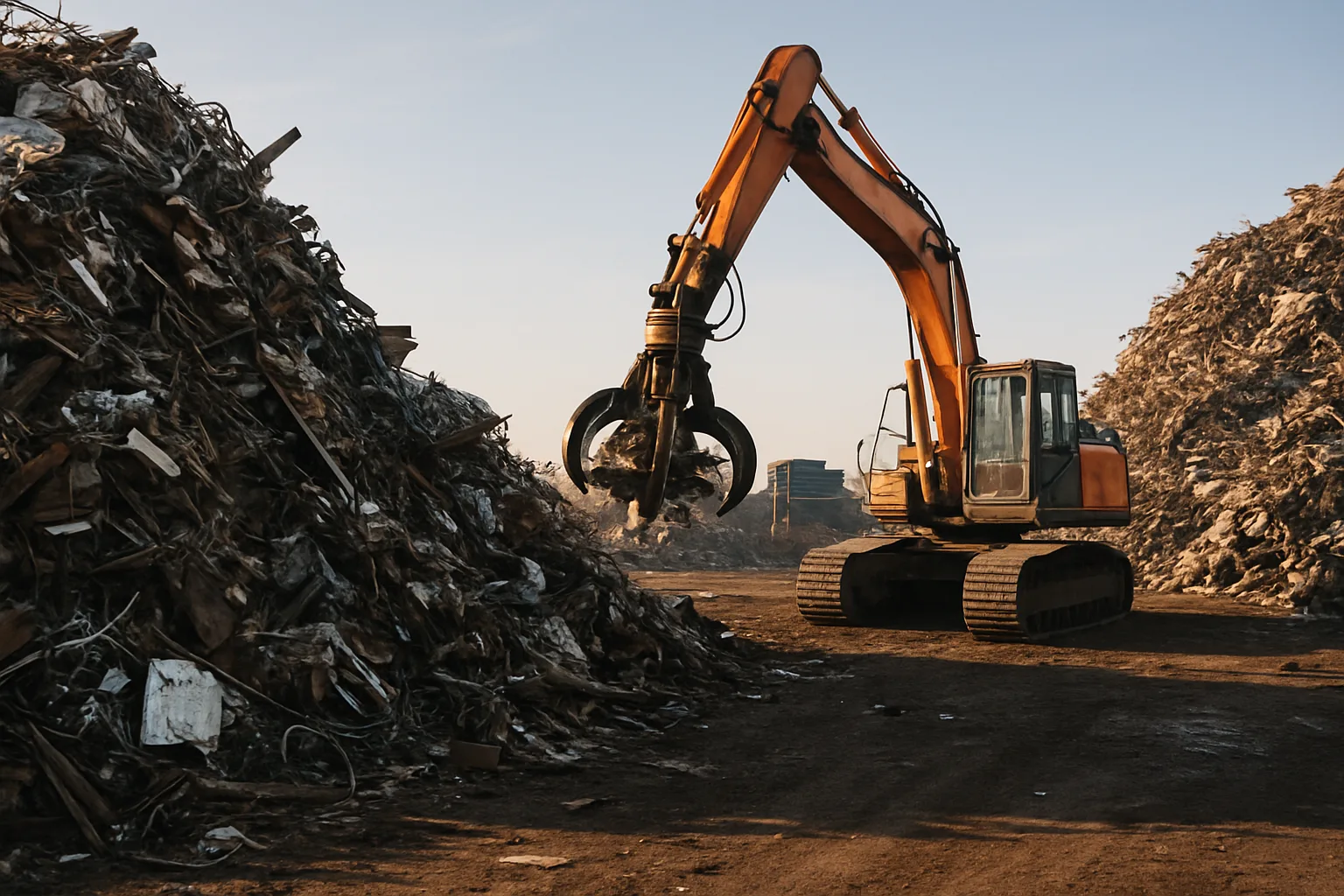
From Assembly Line to Scrap Yard: What Really Happens to Your Car
Every car on the road right now is on a one-way trip to a scrap yard. That's not pessimism — that's physics, economics, and time working together. The average vehicle lifespan in Canada sits somewhere between 12 and 15 years before repair costs outpace the car's value. When that tipping point hits, the smartest move is getting paid for the metal before it turns into a liability sitting in your driveway.
Understanding the full lifecycle of a vehicle — from factory floor to final crush — helps you make smarter decisions about timing, value, and who you call when the end of the road arrives. If you're in Halifax or anywhere across Nova Scotia, knowing what your car is actually worth at each stage changes the conversation entirely.
Stage One: Manufacturing and the Materials That Matter Later
A new passenger vehicle rolls off the assembly line containing roughly 900 to 1,200 kilograms of steel, 100 to 150 kilograms of aluminum, several kilograms of copper wiring, and a catalytic converter packed with platinum group metals. Every one of those materials has a second life. Auto manufacturers design for production efficiency — but recyclers care about what's recoverable at the other end.
The metals baked into your car at the factory are the same metals that make scrap car removal financially worthwhile decades later. Steel frames. Aluminum engine blocks. Copper harness wiring. Even the plastic and rubber components get separated and processed. Nothing gets wasted at a serious recycling facility. The factory essentially pre-loaded your vehicle with recoverable commodity value — you just have to wait long enough to unlock it.
- Steel: The largest component by weight — doors, frame, body panels
- Aluminum: Engine blocks, wheels, transmission housings
- Copper: Wiring harnesses, alternators, starters
- Platinum group metals: Catalytic converters (one of the highest-value parts)
- Fluids: Oil, coolant, refrigerant — drained and processed separately
Stage Two: Active Life, Depreciation, and the Slow Decline
For the first five to seven years, a vehicle loses value fast. Depreciation hits hardest in the early years — sometimes 40 to 50 percent of the original purchase price in the first three years alone. By year eight or ten, depreciation slows, but so does reliability. Parts start failing. Rust starts spreading, especially in coastal climates like Halifax where road salt and ocean air accelerate corrosion on body panels and undercarriages.
This is the stage where most vehicle owners start doing the mental math. A repair bill of $2,500 on a car worth $3,000 stops making sense. The calculus shifts. At this point, your car still has meaningful scrap value — often more than people expect — but that value is tied to the metal, not the mechanics. Junk car buyers near me Halifax searches spike in this window, when owners realize the vehicle isn't worth fixing but is absolutely worth selling.
The longer you wait past this point, the more variables work against you:
- Further corrosion reduces structural steel quality
- Catalytic converters can be stolen (a major issue across Nova Scotia and the rest of Canada in 2026)
- Fluid leaks become environmental liabilities
- Non-ferrous components deteriorate or go missing
Stage Three: The Decision Point — What Triggers a Scrap Car Removal
Most vehicles don't get scrapped on a planned schedule. Something triggers the decision. An engine seizure. A failed safety inspection. A collision write-off. Sometimes it's simpler — the car just sits for two years and the owner finally decides to clear the driveway. Whatever the trigger, the moment you decide the car isn't going back on the road is the moment its scrap value becomes the only value left.
In Halifax specifically, failed MVI (Motor Vehicle Inspection) results push a lot of vehicles into the scrap pipeline. When a repair quote to pass inspection runs higher than the car's market value, scrapping becomes the logical outcome. At that stage, a free junk car pickup service that pays you for the vehicle is a much better deal than paying a mechanic to resurrect something that won't hold its value anyway.
This is exactly where free scrap car pickup across Canada from GetMyScrapCar removes the friction. No hunting for a trailer. No negotiating at a single yard with one offer on the table. You get a quote, schedule the pickup, and someone comes to you.
Stage Four: The Scrap Yard Process — What Happens to Your Car After Pickup
Once your vehicle arrives at a licensed auto recycler, the dismantling process follows a specific sequence. This isn't random — it's driven by environmental compliance requirements and commodity value recovery. In Canada, auto recyclers must follow strict protocols for fluid removal before any crushing or shredding takes place.
Here's the general sequence at a reputable Canadian recycling facility:
- Depollution: All fluids are drained — engine oil, coolant, transmission fluid, brake fluid, refrigerant, fuel
- Parts harvesting: Usable components get pulled for resale — engines, transmissions, doors, electronics
- Catalytic converter removal: One of the highest-value components, tracked by serial number at serious operations
- Battery removal: Lead-acid batteries go through a separate recycling stream
- Tire removal: Tires are processed separately for crumb rubber or retreading
- Crushing or shredding: The remaining steel carcass gets crushed into a bale or fed through an industrial shredder
- Metal sorting: Shredded output gets sorted — ferrous steel goes one direction, non-ferrous metals (aluminum, copper, zinc) go another
The quality and accuracy of scrap metal inventory management at this stage directly affects what the yard recovers and what sellers ultimately get paid. Platforms like SMASH Recycling — where verified buyers bid on your metal bring transparency to this process, replacing single-buyer guesswork with documented inventory and competitive pricing. When buyers can see exactly what's in a load — weights, grades, photos, serial numbers — they bid with more confidence, and that confidence shows up in the final number.
Stage Five: The Metal Market and Why Your Timing Matters
Scrap metal is a commodity. Prices move with global steel demand, aluminum markets, and non-ferrous spot prices. A car scrapped in a strong market pays more than the same car scrapped during a downturn. While no one can perfectly time the market, understanding that prices fluctuate means you shouldn't assume the quote you got last year reflects what your car is worth today.
Disclaimer: Scrap metal prices change frequently based on global market conditions. Always check current rates before making a decision — don't rely on outdated numbers.
In 2026, demand for recovered aluminum and copper remains strong, driven by electric vehicle manufacturing and infrastructure spending across North America. That matters for vehicle owners because non-ferrous content — not just the steel shell — contributes meaningfully to your car's scrap value. A vehicle with its catalytic converter intact, original aluminum wheels, and functioning starter and alternator is worth more than a stripped hulk. SMASH connects yards and buyers in ways that surface this value, rather than burying it in a flat per-tonne offer.
If you're ready to act, schedule your free scrap car removal and get a quote based on current market conditions — not last year's numbers.
What Vehicle Owners in Halifax Should Know Before Calling a Buyer
Not every junk car buyer operates the same way. In Halifax and across Nova Scotia, you'll find a range of operators — from licensed auto recyclers following proper depollution protocols to less scrupulous operations that cut corners on environmental compliance. Working with a reputable service protects you legally and financially.
Before you call anyone, have this information ready:
- Year, make, model, and trim
- Approximate mileage
- Whether the vehicle runs or is non-running
- Condition of the catalytic converter (present and intact vs. missing)
- Your Nova Scotia vehicle registration and proof of ownership
- Location of the vehicle (driveway, garage, rural property)
Providing accurate information upfront gets you a more accurate quote and avoids awkward renegotiations when the driver shows up. For a complete walkthrough of the pickup process and what to expect, read more junk car removal guides on the GetMyScrapCar blog.
Halifax scrap car owners also benefit from working with services connected to verified buyers. Halifax scrap metal services through GetMyScrapCar connect you to buyers who've already been vetted — no cold calls, no guessing whether the number you were quoted will hold.
The lifecycle of your car ends in a recycling stream no matter what. The only question is whether you capture the value it still holds, or let it sit and erode. When you're ready to close that loop, free scrap car pickup across Canada from GetMyScrapCar makes it a one-call process — free towing, fair quote, and documentation handled for you.
Frequently Asked Questions
Q: How much can I get for scrap car removal in Halifax?
Scrap car value in Halifax depends on the vehicle's weight, the current metal market, and which components are intact — especially the catalytic converter and non-ferrous metals. Prices fluctuate, so always get a current quote rather than assuming a past number still applies. Vehicles with all major components present typically return more than stripped or heavily corroded units.
Q: Do I need to bring my car to the scrap yard, or will someone pick it up?
GetMyScrapCar offers free pickup — you don't need to arrange a trailer or drive the vehicle anywhere. A driver comes to your location in Halifax or anywhere across Nova Scotia, whether the car runs or not. This is included at no cost as part of the service.
Q: What documents do I need to scrap a car in Nova Scotia?
You'll need your vehicle registration and proof of ownership (typically the vehicle title or registration certificate in your name). If the vehicle was recently purchased privately, ensure the transfer is documented. Having these ready speeds up the process and protects you legally once the vehicle changes hands.
Q: Does it matter if my catalytic converter is missing?
Yes — the catalytic converter is one of the highest-value components on a scrap vehicle due to the platinum group metals inside. A missing converter will reduce your offer. If your cat has been stolen (a growing issue in 2026 across Canada), be upfront about it so you receive an accurate quote rather than a renegotiated one at pickup.
Q: How long does scrap car removal in Halifax usually take?
Most pickups are scheduled within one to three business days depending on your location and current demand. The actual pickup itself typically takes under an hour — the driver handles loading, paperwork, and payment on the spot. You won't be waiting weeks or making multiple calls to follow up.
Follow SMASH on LinkedIn for ongoing scrap metal market updates, industry insights, and news that affects what your vehicle — and your metal — is actually worth.