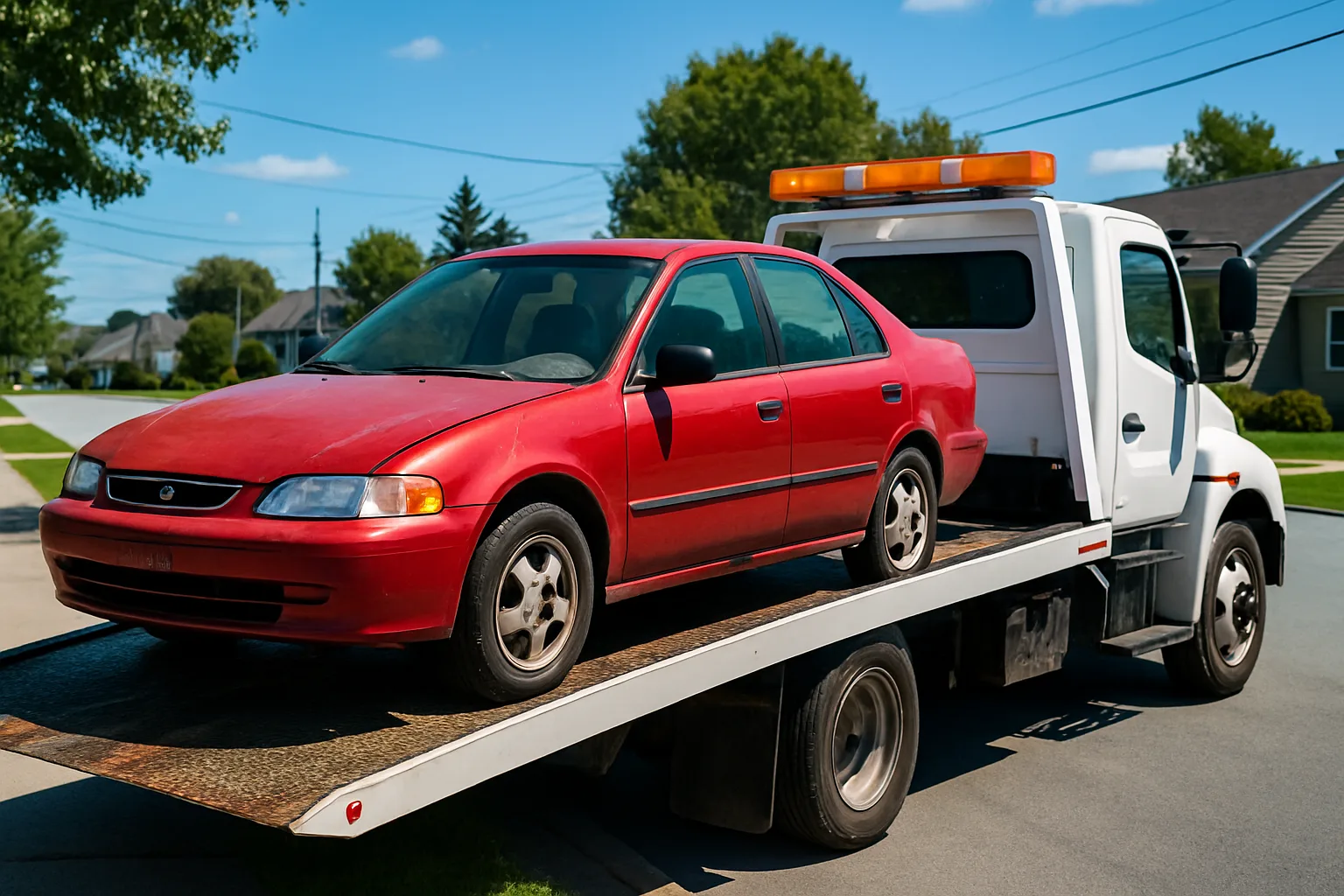
Why the Right Paperwork Unlocks Your Scrap Car Value Today
Your old car is sitting in the driveway. It hasn't moved in months. You know it's worth something — the catalytic converter alone holds value, and the steel in the body adds up fast. But the moment you call a scrap yard or a junk car buyer, the first question is almost always the same: "Do you have the title?" What you bring to that conversation determines how smoothly the process goes — and often, how much you walk away with.
Paperwork isn't the exciting part of scrapping a car. But getting it right is the difference between a fast, clean transaction and a headache that drags on for weeks. This guide breaks down exactly what documents you need to sell your scrap car in Canada, what to do if something is missing, and how services like SMASH are changing the way scrap vehicles get valued and sold.
The Core Documents You Need to Scrap a Car in Canada
Requirements vary slightly by province, but across Canada — including Nova Scotia — the baseline documentation is consistent. If you have these three things in order, you're ready to move.
- Vehicle Title (Ownership Certificate): This is the single most important document. It proves you legally own the vehicle. In Nova Scotia, this is called the Certificate of Registration. Without it, most licensed scrap yards and auto recyclers won't touch the transaction.
- Government-Issued Photo ID: A driver's licence is standard. This confirms you are who you say you are, and that your identity matches the ownership document.
- Vehicle Identification Number (VIN) Confirmation: The VIN on your title must match the VIN on the vehicle itself — typically found on the dashboard near the windshield or on the driver's side door frame. Discrepancies raise flags and can stall or kill the deal.
Beyond these core three, some buyers or recyclers may also ask for a bill of sale if you recently purchased the vehicle privately, a lien release letter if the car was previously financed, or a death certificate and estate documents if the registered owner is deceased. Having these ready upfront saves multiple phone calls and delays.
What Happens If You Don't Have the Title — Especially in Halifax
This is one of the most common situations junk car buyers deal with. Titles get lost. People inherit vehicles. Cars sit abandoned for years before anyone thinks to scrap them. If you're in Halifax trying to sell a scrap car without a title, you're not automatically out of options — but you need to understand the landscape.
In Nova Scotia, you can apply for a replacement vehicle registration through Access Nova Scotia. The process requires proof of identity and vehicle details, and there is typically a processing fee. It's not instant, but it's the cleanest path. Some private junk car buyers will work with a no-title vehicle — particularly if the car is old enough that the paper trail is sparse — but licensed auto recyclers are required to follow provincial regulations around proof of ownership. A buyer willing to skip the title entirely should raise a red flag.
If you're searching for junk car buyers near me for cash no title, understand what you're actually asking. Some operations work in grey areas. Others have legitimate processes for abandoned or estate vehicles. Ask direct questions: Are they licensed? Do they report the transaction? Will they provide a receipt? If the answers are vague, walk away. Your scrap car value today isn't worth a legal complication tomorrow.
For Halifax scrap metal services, working with established, licensed buyers connected to transparent platforms protects both you and the buyer.
How SMASH Makes Paperwork Work Harder for You
Here's where the process starts to modernize. The SMASH Recycling auction platform brings structure to what has historically been a chaotic, gut-feel industry. When scrap vehicles are listed through a platform like SMASH, documentation isn't just a checkbox — it's a tool for getting better pricing.
When a vehicle is properly documented and that documentation is attached to a listing — VIN verified, title confirmed, condition photos uploaded, parts inventoried — buyers bid with more confidence. More confidence from buyers means more competitive bidding. More competitive bidding means better scrap car value today for the seller. It's not complicated. It's just how markets work when information is transparent instead of hidden.
SMASH also supports serial tracking and photo documentation, which matters when you're dealing with higher-value components like catalytic converters or non-ferrous cores. A catalytic converter that's photographed, serial-tagged, and attached to a verified VIN is worth more to a vetted buyer than one that shows up with zero provenance. The paperwork you bring to the transaction flows directly into the platform's documentation tools — and that pays off at the auction stage.
Provincial Regulations in Nova Scotia: What's Changed in 2026
Across Canada, provincial governments have been tightening regulations around scrap vehicle transactions over the past several years. In Nova Scotia, auto recyclers are required to maintain records of vehicle acquisitions — including ownership verification — under provincial environmental and consumer protection frameworks. These rules exist for good reasons: they reduce vehicle theft, prevent illegal dumping, and create accountability in the recycling chain.
As of 2026, buyers and recyclers operating in Nova Scotia are expected to record the seller's ID, the vehicle's registration details, and the transaction amount. Some municipalities have additional reporting requirements for high-volume operations. This isn't bureaucratic overreach — it's the foundation of a legitimate transaction. If a buyer isn't asking for your ID or documentation, they're likely not reporting the purchase either. That's a problem for them legally, and potentially for you if the vehicle later becomes associated with an issue.
For sellers, the practical takeaway is simple: bring your paperwork, work with licensed buyers, and get a receipt. If you're using free scrap car pickup across Canada from GetMyScrapCar, the process is structured to meet these requirements cleanly — no guesswork, no grey areas.
Scrap Metal Inventory Management and Why It Matters at End-of-Life
Most people think of scrapping a car as a single transaction. Hand over the keys, collect the cash, done. But for recyclers, and increasingly for sellers who want to maximize value, scrap metal inventory management is a real discipline — and it starts the moment you decide to scrap.
A vehicle is not just steel. A typical passenger car contains:
- Steel and iron — the bulk of the vehicle's weight, priced per tonne on the ferrous market
- Aluminum — wheels, engine blocks, and radiators carry a premium over steel
- Copper — wiring harnesses, alternators, and starters
- Catalytic converters — contain platinum group metals and are among the highest-value components by weight
- Lead-acid batteries — have a consistent secondary market
When you document your vehicle properly — and when a platform like SMASH applies its inventory tools to the listing — these components can be broken out and priced individually rather than lumped into a flat scrap rate. That's how sellers leave less money on the table. The paperwork you start with feeds directly into how accurately a vehicle gets inventoried and valued.
Want to understand more about the process before you commit? Read more junk car removal guides to get up to speed on how pricing works, what affects your offer, and what to expect from pickup to payment.
Step-by-Step: Getting Your Paperwork Ready to Sell Your Scrap Car
If you want to move quickly and get a fair offer, here's the practical sequence to follow before you call anyone:
- Locate your Certificate of Registration (title). Check the glove box, your filing cabinet, or wherever you store vehicle documents. If it's missing, start the replacement process through Access Nova Scotia before you do anything else.
- Confirm the VIN matches. Cross-check the VIN on the document against the VIN on the vehicle. Take a photo of both for your records.
- Gather your photo ID. Your driver's licence is easiest. Make sure the name matches the registration.
- Document any liens. If you're still making payments or recently paid off a loan, contact your lender for a lien release letter before you try to sell.
- Photograph the vehicle. Exterior, interior, under the hood. This speeds up the valuation process and protects you if there's any dispute about condition.
- Cancel your insurance and plates. In Nova Scotia, you can return your plates to Access Nova Scotia and receive a refund on unused insurance. Don't pay premiums on a car you've already sold.
When you're ready, schedule your free scrap car removal and let the process work the way it's supposed to — fast, documented, and fair.
Frequently Asked Questions
Q: Can I sell my scrap car in Halifax without a title?
Some private buyers will consider a no-title vehicle, but licensed auto recyclers in Nova Scotia are required to verify ownership. Your best first step is to apply for a replacement registration through Access Nova Scotia. It takes time, but it protects you legally and usually results in a better offer.
Q: How does paperwork affect my scrap car value today?
Directly. A fully documented vehicle — title confirmed, VIN verified, condition photographed — gives buyers more confidence. More confidence leads to more competitive offers. Platforms like SMASH are built around this principle: transparency in documentation drives better price discovery for sellers.
Q: What do I do with the licence plates when I scrap my car in Nova Scotia?
In Nova Scotia, plates belong to the vehicle owner, not the vehicle. Return them to an Access Nova Scotia location when you sell the car. You may be eligible for a refund on unused vehicle registration fees. Cancel your insurance at the same time.
Q: Is free towing actually included when I sell my scrap car?
With GetMyScrapCar, yes — free pickup is part of the service across Canada, including Halifax. You don't pay for towing, and there are no hidden fees subtracted from your offer after the fact. What you're quoted is what you receive.
Q: How do I find legitimate junk car buyers near me in Halifax?
Look for buyers who ask for your ID and documentation, provide a written receipt, and are connected to licensed recycling operations. If a buyer is willing to skip all paperwork and pay cash with no questions asked, that's a red flag — for your legal protection as much as anything else. Services connected to platforms like SMASH operate with verified buyers and documented transactions.
---If your car is done, don't let paperwork confusion be the thing that stalls you. Get your documents in order, know what you're working with, and connect with buyers who operate transparently. GetMyScrapCar handles the pickup anywhere in Canada — including Halifax — with free towing and a straightforward process. When you're ready, get a free quote and schedule your free scrap car removal at getmyscrapcar.ca.
Prices for scrap vehicles and metal components fluctuate with market conditions. Always check current rates before finalizing any transaction.
Stay current on scrap metal market trends and industry news — follow SMASH on LinkedIn for regular updates straight from the auction floor.