Think Selling Your Scrap Car Is Complicated? Here's What's Actually True
Most people sit on a dead vehicle for months — sometimes years — because they've heard something that made the process sound harder than it is. The car rusts. The driveway fills up. And the money just sits there, locked inside steel and aluminum and the occasional high-value catalytic converter. If you're trying to sell scrap car Fredericton, you've probably run into at least one of these myths. Let's kill them one by one.
The junk car removal process in 2026 is faster, more transparent, and more competitive than most people realize. Platforms like compare scrap metal bids from Canadian buyers SMASH have changed how yards and buyers compete for your vehicle — which means the old guessing game is largely gone. But the myths persist. So here's the truth.
Myth #1: You Won't Get Much Money for a Junk Car
This is the biggest one. People picture a wrecker tossing them $50 and driving off. The reality? A scrapped vehicle is worth its weight in metal, plus the value of reusable parts. An average passenger car weighs roughly 1,400 to 1,800 kilograms. Steel, aluminum, copper wiring, and non-ferrous components all carry real market value — and that value fluctuates with commodity markets.
The most overlooked piece is the catalytic converter. If your vehicle has one intact, it may contain platinum, palladium, or rhodium — metals that have held significant value in recent years. A catalytic converter auction process through platforms like SMASH lets buyers bid competitively on those cores, which means you're not stuck with a single lowball offer from whoever answered the phone first. More buyers competing means better price discovery. That's not a promise of a higher number — it's math.
- Steel scrap fluctuates based on North American commodity markets
- Aluminum (wheels, engine components) adds meaningful value
- Catalytic converters can be significant contributors depending on the vehicle make
- Reusable parts (doors, mirrors, transmissions) may be stripped before crushing
The point: don't assume a dead car is worth nothing. Get a quote first. You might be surprised.
Myth #2: You Need a Running Car to Get It Picked Up
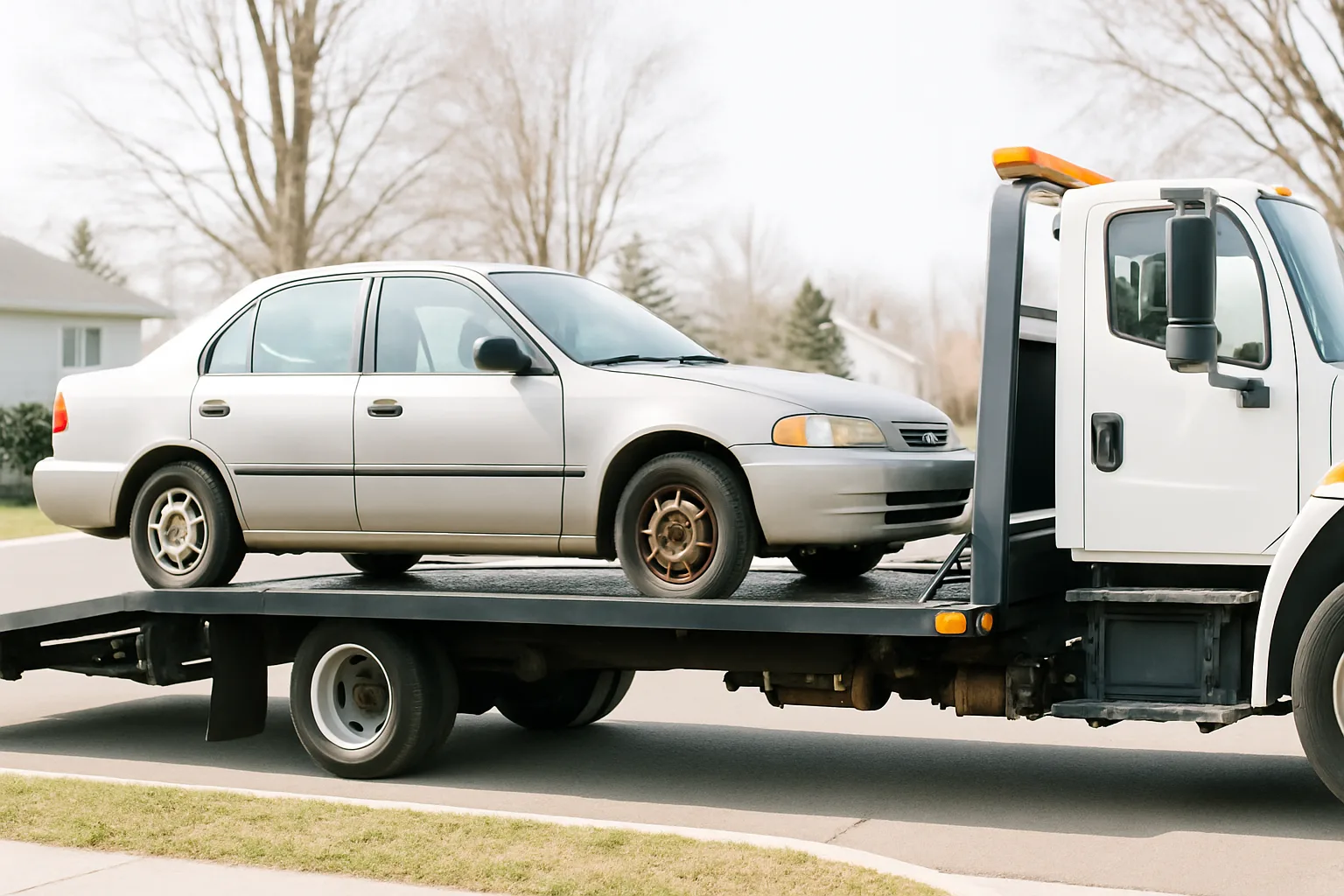
This one stops people cold. The car doesn't start. The transmission is gone. All four tires are flat. Doesn't matter. Free scrap car pickup across Canada from GetMyScrapCar covers non-running vehicles. That's the whole point — if the car could drive, you'd probably have sold it differently.
Removal crews use flatbeds and wheel-lift trucks specifically built to handle vehicles that can't move under their own power. Whether your car is sitting in a garage in Fredericton, stuck in a backyard in Moncton, or buried under two winters of New Brunswick snowfall with no wheels on it — the pickup process still works. You don't need to prep the car, move it to the curb, or do anything mechanical to make it accessible beyond basic lot access.
What you do need:
- Proof of ownership (your vehicle title or registration)
- Photo ID
- Confirmation that the vehicle is yours to sell
That's it. The tow is handled. The paperwork gets processed. You hand over the keys and walk away with cash or a payment confirmation.
Myth #3: The Process Takes Forever and Involves Too Much Paperwork
People imagine a mountain of forms, weeks of back-and-forth, and multiple trips to a registry office. In practice, a straightforward junk car sale in New Brunswick can be completed in 24 to 72 hours from first contact to pickup. Some situations resolve same-day.
The paperwork involved is minimal: sign over the title, provide your ID, and in most cases the buyer or removal service handles the deregistration process from there. You're not filing anything complicated. You're not navigating a government portal. You hand over a signed title and a car that no longer works, and the process wraps up fast.
If you're using a service that connects you to vetted buyers — and platforms like SMASH build in auto-invoicing and documentation tracking — the back-end is even cleaner. No chasing invoices. No wondering whether the buyer actually paid. The record exists. You can read more junk car removal guides if you want to understand exactly how the documentation flow works before you commit.
Myth #4: All Scrap Car Buyers Offer the Same Price
This one is expensive to believe. If you call one yard, get one number, and accept it — you may have left real money on the table. Scrap metal prices vary by buyer, by location, by what the yard needs that week, and by how much competition exists in the market. A yard that's short on certain non-ferrous material may bid aggressively. A yard that's sitting on inventory may not.
The only way to know what your vehicle is actually worth is to introduce competition. That's the core idea behind auction-based platforms — instead of accepting the first offer, you let vetted buyers place bids. Whether you're in Fredericton or anywhere else across the country, schedule your free scrap car removal and let the market tell you what the vehicle is worth rather than guessing.
This matters especially for vehicles with high-value components:
- Late-model trucks with catalytic converters intact
- Diesel vehicles with aluminum engine blocks
- Hybrids or EVs with battery packs and copper wiring
- Vehicles with complete, undamaged interiors (seats, dash, electronics)
A single phone call to a single buyer prices none of that correctly. Competition does.
Myth #5: You Can't Sell Without a Title
Title situations are more flexible than most people assume. Yes, having a clean title makes the transaction straightforward. But a lost title, a title in a deceased family member's name, or an older vehicle with no title on hand doesn't automatically kill the deal.
Many buyers in Canada — and specifically in New Brunswick — work with sellers to navigate these situations. You may be able to apply for a replacement title through Service New Brunswick before the sale. In some cases, depending on the vehicle's age and value, buyers work within provincial guidelines to accept alternative proof of ownership. The key is to disclose the situation upfront. Don't wait until the truck is in the driveway to mention the title is missing.
If you're unsure about your specific situation, contact the removal service before booking. Most will walk you through what documentation they need and what alternatives exist. It's a solvable problem more often than not.
Myth #6: Junk Car Removal Services Only Operate in Big Cities
This one leads people in smaller markets to assume they're out of luck. If you're in Fredericton, you might think the good removal services only cover Toronto or Vancouver. That's not how it works anymore.
National removal networks and buyer platforms have expanded coverage significantly across Canada. Fredericton scrap metal services are active and accessible — you're not stuck choosing between the two yards that happen to be nearby. Coverage extends into rural New Brunswick, smaller towns, and communities that would have been underserved a decade ago. The logistics have caught up with the demand.
The same goes for specialized components. If your vehicle has a catalytic converter that warrants a proper auction rather than a flat offer, that process works remotely. Buyers bid based on documented inventory — VIN, photos, serial tracking — not on whether they can physically walk the lot. Geography matters less than it used to when the documentation is handled digitally.
Don't Let Myths Keep Money Sitting in Your Driveway
End-of-life vehicles lose value over time. Parts corrode. Fluids leak. The catalytic converter that was worth something last year may not be in the same condition next spring. Waiting doesn't help. And the myths that kept you waiting were wrong to begin with.
If you've got a junk car in Fredericton or anywhere else in Canada, the process is simpler than you think, the market is more competitive than a single phone call will show you, and the pickup is free. Get a free quote for your scrap car in Canada and schedule your free scrap car removal at getmyscrapcar.ca — it costs nothing to find out what your vehicle is actually worth.
Disclaimer: Scrap metal and vehicle prices fluctuate based on commodity markets, vehicle condition, and buyer demand. Always check current rates before making a decision.
Frequently Asked Questions
Q: How much can I get if I sell scrap car in Fredericton?
It depends on the vehicle's weight, condition, make, model, and current metal prices. Heavier vehicles with intact catalytic converters and non-ferrous components typically return more. The best way to know is to get a quote — prices fluctuate, so today's rate may differ from what you read last month.
Q: Is free scrap car pickup available in Fredericton?
Yes. Free pickup is standard for most junk vehicle removal services operating in Fredericton and across New Brunswick. You don't pay for the tow — the cost is factored into the buyer's offer. No running car required.
Q: Do I need my title to sell my junk car in New Brunswick?
Having a title makes the process easier, but a lost or unavailable title isn't always a dealbreaker. You may be able to get a replacement through Service New Brunswick, or the buyer may accept alternative documentation depending on the vehicle's age. Always disclose your situation upfront.
Q: What happens to my car's catalytic converter when I scrap the vehicle?
Catalytic converters contain precious metals and are processed separately from the rest of the vehicle. Platforms that use a catalytic converter auction format — like SMASH — allow vetted buyers to bid competitively on those cores, which can improve what you receive compared to a flat offer from a single yard.
Q: How long does the junk car removal process take in Fredericton?
Most straightforward removal jobs are completed within 24 to 72 hours of first contact. Some same-day pickups are available depending on scheduling and location. The process is faster than most people expect — especially when documentation is in order.
Stay current on scrap metal market trends and industry insights by following SMASH on LinkedIn — useful whether you're scrapping one car or managing a full recycling operation.