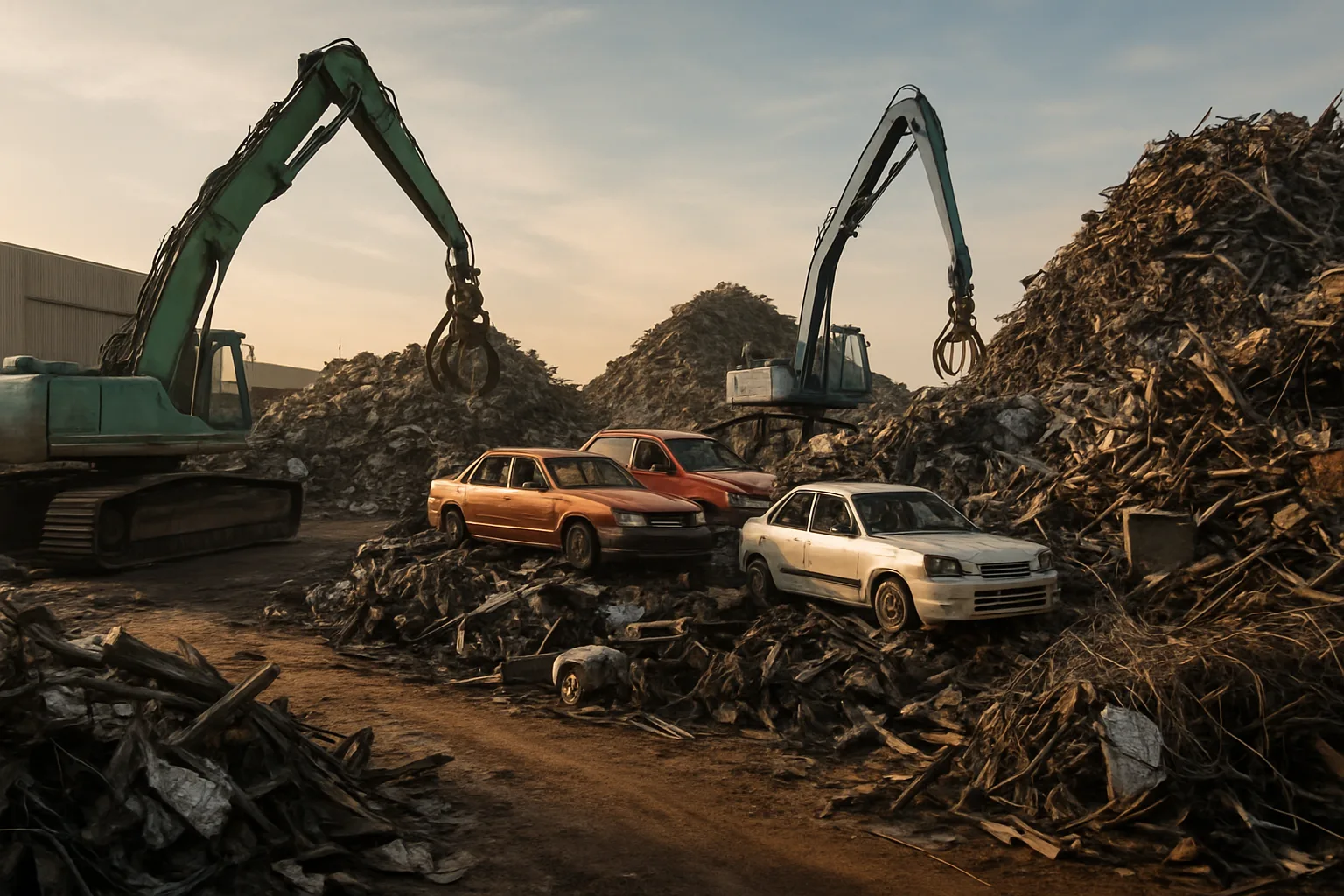
From the Assembly Line to the Scrap Yard: The Full Lifecycle of a Car
Every car you see on the road right now is somewhere in a journey that ends the same way — at a recycling facility, being broken down for parts and metal. Most people only think about cars when they're buying them or when they finally stop running. But understanding the full lifecycle of a vehicle helps you make smarter decisions, especially when that moment comes and you're wondering what to do with a car that costs more to fix than it's worth.
If you're in Markham or anywhere across Ontario and you've got a vehicle sitting in your driveway collecting rust, this article is for you. Let's walk through every stage of a car's life — and what happens when it reaches the end of the road.
Stage 1: Birth — Manufacturing and Materials
A modern vehicle starts as raw materials. Steel, aluminum, copper, rubber, glass, and plastics are extracted, refined, and shipped to manufacturing plants. A typical passenger vehicle contains roughly 65–70% steel and iron by weight, along with significant amounts of aluminum (especially in newer models), copper wiring, and various precious metals in components like the catalytic converter.
The environmental cost of building a car is substantial. Energy, water, and raw materials go into stamping, welding, painting, and assembling thousands of individual components. This is one of the reasons why recycling end-of-life vehicles matters so much — the metals recovered at the scrap yard reduce the demand for virgin ore, cutting the energy cost of the entire chain.
- Steel: Frame, body panels, chassis components
- Aluminum: Engine blocks, wheels, hoods (increasingly common)
- Copper: Wiring harnesses, motors, connectors
- Platinum group metals: Catalytic converter substrate
- Rubber and plastics: Interior, seals, hoses, bumpers
Understanding what's inside a car matters later when you're trying to schedule your free scrap car removal — because the composition of your vehicle directly affects what it's worth as scrap.
Stage 2: Active Life — Ownership, Maintenance, and Depreciation
Once a car rolls off the lot, it depreciates fast. Most vehicles lose 15–25% of their value in the first year alone. Over the following decade, maintenance costs climb while resale value falls. Engine wear, rust (especially in Ontario winters), transmission issues, and suspension problems stack up.
The average Canadian vehicle stays on the road for roughly 12–15 years. In regions with heavy road salt use — and Markham and the rest of Ontario definitely qualify — rust accelerates the aging process. Undercarriage corrosion, frame rot, and brake line deterioration are all accelerated by Canadian winters, which is one reason so many vehicles end up reaching end-of-life earlier than they might in warmer climates.
During the active ownership phase, a vehicle cycles through multiple owners in many cases. First the original buyer, then possibly a used car dealer, then a second or third private owner. Each transfer brings the car closer to the point where repair costs exceed market value — and that's the moment the lifecycle shifts from transportation asset to scrap metal.
Stage 3: The Tipping Point — When Repair Costs Exceed Vehicle Value
There's a specific moment in every car's life when the math stops working. When a mechanic quotes you $3,500 to fix a transmission on a car worth $2,000, you've hit the tipping point. At that point, you're not maintaining a vehicle — you're subsidizing a money pit.
This is where a lot of Ontario vehicle owners get stuck. They don't want to scrap a car that still "runs sometimes." They feel guilty. They wonder if they're leaving money on the table. But here's the reality: a car past its tipping point loses value every week it sits. Fluids degrade. Tires go flat. Rodents nest in the engine bay. What was worth $800 in January might be worth $500 by spring.
The smart move is to act quickly. Services that offer scrap car removal in Markham and across Ontario will assess your vehicle as-is — running or not, damaged or not, with or without a title in some cases. That's the value of working with buyers who understand end-of-life vehicles. You don't need to fix anything. You don't need to clean it. You just need to make the call.
Platforms like SMASH help connect sellers with vetted Canadian scrap buyers who compete for your load — bringing transparency to a process that has historically meant one buyer, one phone call, and a price you had no way to verify.
Stage 4: Depollution and Dismantling — What Happens at the Scrap Yard
Once a vehicle arrives at an auto recycler or scrap yard, a regulated depollution process begins. In Ontario, this is governed by provincial environmental standards. Fluids — engine oil, transmission fluid, brake fluid, coolant, and refrigerant — must be drained and disposed of properly before any crushing or shredding takes place.
After depollution, the real value extraction starts:
- Catalytic converter removal — Cats contain platinum, palladium, and rhodium. They're one of the highest-value components on most vehicles.
- Battery removal — Lead-acid batteries are fully recyclable and have a strong secondary market. EV lithium packs are processed separately.
- Usable parts harvesting — Engines, transmissions, alternators, doors, and mirrors are pulled if they have resale value.
- Non-ferrous metal stripping — Copper wiring, aluminum radiators, and other non-ferrous components are separated before the shell goes to the shredder.
- Shredding and sorting — What remains gets shredded and magnetically separated into ferrous and non-ferrous streams for sale to steel mills and foundries.
The auto recycling industry in Canada processes hundreds of thousands of vehicles per year. It's one of the most material-efficient industries in the country. When you choose free scrap car pickup across Canada from GetMyScrapCar, your vehicle enters this recycling chain rather than sitting in a field or going to landfill.
Stage 5: The Scrap Metal Market — What Your Car Is Worth and Why It Fluctuates
Scrap metal prices are not fixed. They move with global commodity markets — steel futures, aluminum demand, copper prices, and the strength of export markets all affect what a scrapped vehicle is worth on any given week. In 2026, the North American scrap market continues to see pressure from both domestic steel demand and international trade conditions.
For a typical end-of-life passenger vehicle in Ontario, the scrap value is primarily driven by its weight as a steel shell. But the components stripped before shredding — the cat, the copper, the aluminum — can represent significant additional value. This is why who you sell to matters. A buyer who only pays you on shredded steel weight is leaving money on the table that someone else is pocketing.
That's exactly the problem SMASH was built to solve. Instead of guessing what your load is worth or accepting the first offer from your local yard, platforms like SMASH put your scrap in front of multiple vetted buyers who compete. More competition means better price discovery. It's not complicated — it's just how markets are supposed to work.
If you want to sell scrap metal online or get competitive bids on a vehicle load, this approach beats cold-calling a single buyer every time. You can also read more junk car removal guides to understand exactly what affects your vehicle's scrap value before you commit to a buyer.
Disclaimer: Scrap metal prices fluctuate based on market conditions. Always check current rates before making decisions. The figures referenced in this article are general estimates for informational purposes only.
What This Means for You — Selling Your Junk Car in Markham
If you're in Markham with a vehicle that's past its prime, you don't need to navigate this process alone. The lifecycle of a car ends the same way regardless — the only question is whether you get fair value for it or not.
Here's what the right scrap car removal process looks like for Ontario vehicle owners:
- Free towing included — You shouldn't pay to have a scrap car hauled away. Reputable buyers cover the tow.
- No title required in many cases — Lost your paperwork? Many buyers can still work with you. Bring any ownership documents you have.
- Same-day or next-day pickup — In major Ontario markets including Markham, fast pickup is standard with the right service.
- Cash or e-transfer payment — Get paid at pickup. No waiting, no invoicing delays.
- Any condition accepted — Running, not running, damaged, flooded, fire-damaged. It doesn't matter.
Understanding the full lifecycle of your vehicle — from the steel mill to the shredder — makes it easier to approach this process with confidence. Your car isn't just garbage. It's a material asset at the end of a long chain, and you deserve to know what it's actually worth.
If you're ready to close out the lifecycle on your vehicle and get something back for it, get a free quote for your scrap car in Canada and schedule free pickup at getmyscrapcar.ca. The process is straightforward, the pickup is free, and you walk away with cash instead of a car that's draining your driveway space and your patience.
Frequently Asked Questions
Q: How do I sell my junk car in Markham without a title?
Many scrap car buyers in Ontario can accept vehicles without a title, especially if you can provide other proof of ownership such as a vehicle registration or insurance documents. Contact your buyer upfront to clarify what documentation they need. The process is often simpler than people expect, and it shouldn't stop you from getting a quote.
Q: How long does scrap car removal take in Markham?
Most reputable services offering scrap car removal in Markham can arrange pickup within 24–48 hours of your request. In many cases, same-day service is available depending on your location and scheduling. Free towing is typically included, so there's no delay waiting to arrange transport on your end.
Q: What affects the price I get for my junk car in Ontario?
The biggest factors are vehicle weight, the current price of scrap steel, whether high-value components like the catalytic converter are still intact, and the condition of recoverable parts. Scrap metal prices fluctuate with the global commodity market, so the quote you get today may differ from one you receive in a few weeks. Always check current rates before finalizing a deal.
Q: Does it cost anything to have a junk car picked up in Canada?
With services like GetMyScrapCar, pickup is free. You should never pay for towing when scrapping a vehicle — that cost should be covered by the buyer. If a buyer is deducting tow fees from your payout, factor that into your comparison before accepting an offer.
Q: Can I sell a car for scrap if it doesn't run?
Absolutely. Non-running vehicles are accepted by scrap car buyers across Ontario and Canada. Whether the engine is seized, the transmission is gone, or the car hasn't moved in years, it still has scrap metal value. You don't need to make any repairs — scrap buyers purchase vehicles as-is.
Stay current on scrap metal market trends and industry news by following SMASH on LinkedIn — practical insights for recyclers, buyers, and sellers across North America.