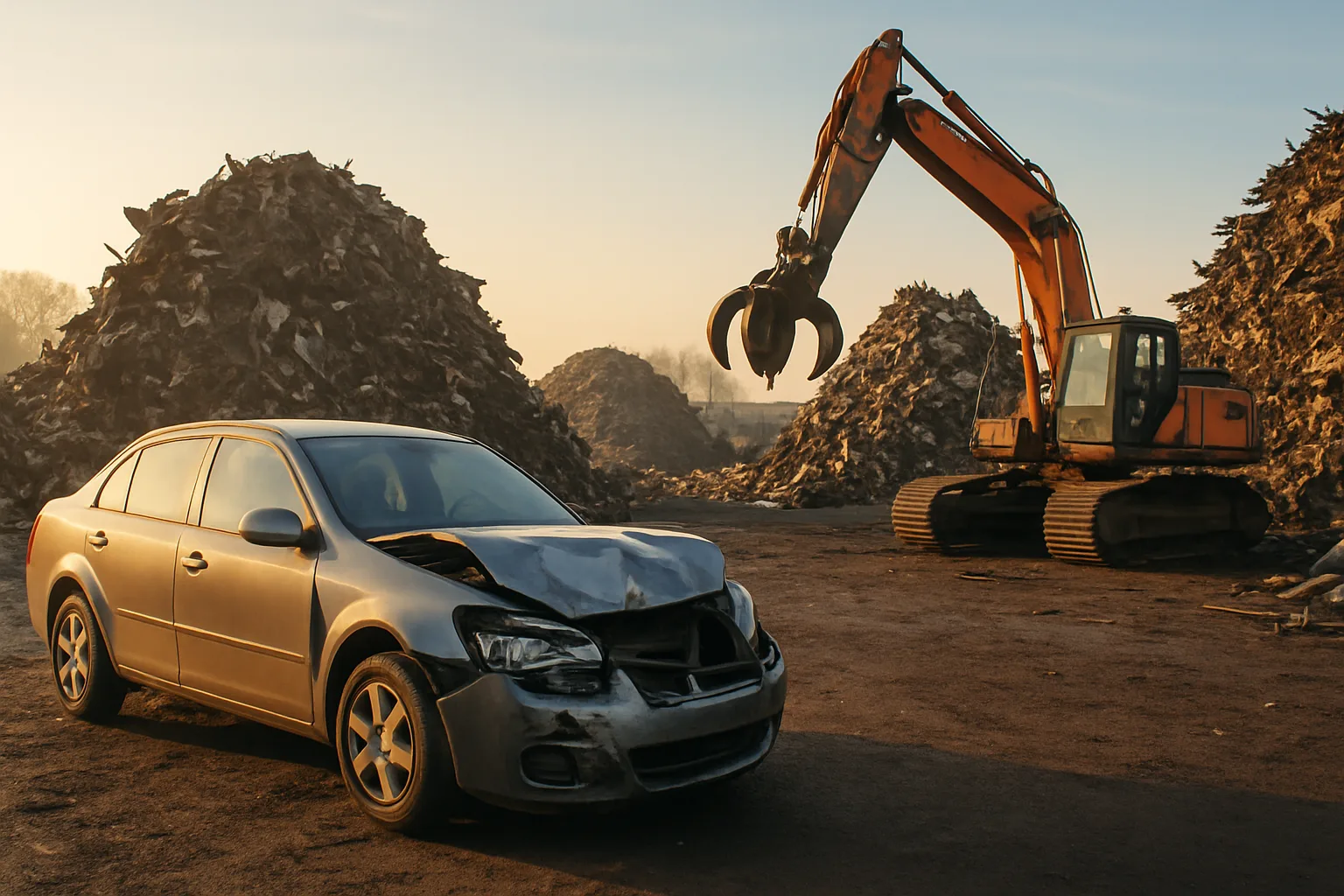
What Happens to an Accident-Damaged Car When You Scrap It?
Your car took a hit. Maybe it was a rear-ender on Gaetz Avenue, a rollover on the highway outside Red Deer, or a total write-off from a hailstorm that swept through Alberta. The insurance company cut you a cheque — or didn't — and now you're sitting on a crumpled vehicle with no clear path forward. Here's the truth most people don't know: accident-damaged cars still have real value, and scrapping one is often faster and more straightforward than trying to repair or privately sell it.
If you're searching for we buy junk cars Red Deer after a collision, this guide breaks down exactly what to expect — from what your wrecked car is actually worth, to which parts buyers care about most, to how to get paid without getting lowballed.
Why Accident Cars Are Still Worth Scrapping (and Sometimes Worth More Than You Think)
A car that's been in a collision isn't just a pile of bent metal. Buyers — including auto recyclers and scrap processors — look at a damaged vehicle in layers. The frame might be toast, but the catalytic converter, the transmission, the alternator, and hundreds of pounds of ferrous and non-ferrous metal are still fully recoverable.
Here's what actually gets valued when you scrap an accident car:
- Catalytic converters: These contain platinum, palladium, and rhodium — and they survive most crashes intact. If you want to sell catalytic converters online, platforms like find the best price for your scrap in Canada let you put those cats in front of multiple competing buyers instead of settling for the first offer you get.
- Non-ferrous metals: Aluminum wheels, copper wiring, and radiators all hold value regardless of the car's condition.
- Ferrous steel: The body panels, frame rails, and chassis components get shredded and sold by weight. Most passenger vehicles weigh between 1,200 and 1,800 kg — that's a significant steel load.
- Working mechanical parts: If the engine or transmission survived the crash, recyclers can pull and resell those components. This can push your total payout higher than a straight steel-by-weight calculation.
- Airbag components and electronics: Depending on deployment and damage, some electrical modules retain resale value through the used parts market.
The bottom line: don't assume a wrecked car is worth nothing. Get it in front of the right buyers before you accept the first number you're offered.
Step-by-Step: How to Scrap an Accident-Damaged Car in Red Deer
The process isn't complicated, but there are a few steps you need to follow to avoid headaches — especially around paperwork and title transfer in Alberta.
- Gather your documents. You'll need the vehicle's registration and proof of ownership. If the car was a total loss, your insurer may have already issued a salvage title. Know what you have before you call anyone.
- Get your VIN ready. Scrap car buyers and recyclers will run the VIN to confirm ownership history and check for liens. Have it available — it speeds up the quote process significantly.
- Photograph the damage honestly. Good photo documentation works in your favour. It gives buyers an accurate picture upfront, which means fewer surprises at pickup and less chance of a last-minute price reduction.
- Request quotes from multiple buyers. This is where most sellers leave money on the table. One call to one buyer is a guess, not a price. Free scrap car pickup across Canada from GetMyScrapCar connects you with buyers who compete for your vehicle — that competition is how you find the real market rate.
- Confirm towing arrangements. If your car doesn't run — and after a serious accident, it probably doesn't — you need free towing included in the deal. Confirm this before you agree to anything. Most reputable scrap car removal Red Deer services include towing at no cost.
- Cancel your insurance and plates. Once the car is picked up, return your Alberta licence plates to a registry and cancel your insurance. You may be entitled to a partial refund on your premium.
- Transfer the title. Sign over ownership properly. Don't hand over a vehicle without completing the paperwork — this protects you from future liability.
Following these steps keeps you protected and ensures you walk away with the best offer available, not just the most convenient one.
What Affects the Scrap Value of a Collision-Damaged Vehicle
Not all accident cars are created equal. Several factors will influence what buyers are willing to pay — and understanding them helps you set realistic expectations before you start making calls.
Vehicle make, model, and year matter more than most people realize. A 2019 half-ton truck with a smashed front end has far more recoverable value than a 2008 compact with frame damage and 300,000 km on it. Trucks and larger SUVs common across Alberta typically yield more by weight alone.
Other key factors include:
- Type of damage: Front-end collision? Rear impact? Rollover? The location and severity of damage determines which parts are salvageable.
- Whether the airbags deployed: Deployed airbags reduce interior salvage value but don't affect the metal or mechanical components.
- Current steel and non-ferrous metal prices: Scrap metal markets fluctuate. The price you get today may be different next month. Always check current rates — note that prices vary and you should confirm current market values before finalizing any deal.
- Catalytic converter condition: If the cat is intact and uncut, it adds meaningful value. If it was already removed or stolen — a growing problem across Alberta — that value disappears.
- Location and accessibility: A car sitting in your driveway in Red Deer is easier and cheaper to pick up than one stuck in a ditch 40 km down a rural road. Accessibility affects logistics costs, which can affect your net payout.
For anyone in central Alberta looking to maximize what they get for a wrecked vehicle, working with platforms like SMASH means your vehicle goes in front of vetted buyers who are actually competing — not just one recycler quoting whatever they feel like that day.
Common Mistakes to Avoid When Scrapping an Accident Car
People rushing to clear a driveway or settle an insurance situation often make avoidable mistakes that cost them money or create legal headaches down the road. Here are the ones that come up most often in the cash for cars Alberta market.
- Accepting the first offer without comparing. A single quote is not a market price. It's one buyer's number. More quotes equal better price discovery — that's just how markets work.
- Selling without resolving a lien. If you still owe money on the vehicle, a lien may exist. Some buyers will handle this, but you need to disclose it upfront. Hiding a lien creates legal exposure.
- Removing parts before getting a quote. Stripping your cat or pulling the battery before getting quotes can actually hurt your offer. Some buyers price the whole vehicle as a unit. Strip it first without asking and you might reduce your payout.
- Not confirming towing is included. Towing fees can run $150–$300 or more depending on distance. If towing isn't included in your offer, that comes straight off your net. Always confirm upfront.
- Forgetting to cancel insurance and plates. This is a straightforward admin step, but people forget it every day. Once the vehicle leaves your hands, you don't want to be paying insurance on it.
Avoiding these mistakes is straightforward once you know them. The goal is to read more junk car removal guides so you go into the process informed — not learning lessons the expensive way.
Why Competitive Bidding Gets You More for Your Wrecked Car
Here's where most sellers in the traditional scrap car buyers near me search get left behind. They call a local recycler, accept a number, and move on — never knowing if that number was fair or not. That's the old way of doing it. It worked when there were no alternatives. There are alternatives now.
SMASH brings vetted buyers into competition for your scrap vehicle. Instead of one offer, you get multiple buyers seeing your load — your cat, your steel weight, your mechanical components — and bidding against each other. That competitive pressure is what reveals the actual market price for your car, not just what one buyer decided to tell you.
For Red Deer scrap metal services, this matters. Red Deer sits at the centre of central Alberta's resource and transportation economy. There are real buyers in this market who want your material. The question is whether they're competing for it or whether just one of them is getting a quiet deal.
Whether you're scrapping a single accident car or clearing out a fleet of damaged vehicles, schedule your free scrap car removal and let buyers come to you with competitive offers. That's how you stop guessing and start knowing what your vehicle is actually worth.
The scrap market in 2026 remains active across Canada. Demand for recycled steel and recovered non-ferrous materials continues from manufacturers and processors from coast to coast. Your wrecked car is raw material to someone — make sure you're the one who captures that value, not the first buyer who shows up with a lowball number and a flatbed.
Frequently Asked Questions
Q: Can I scrap a car that's been written off by insurance in Alberta?
Yes. A vehicle with a salvage or total-loss designation from your insurer can absolutely be scrapped. You'll need the proper paperwork — typically the salvage certificate or proof of ownership signed over to you — and the buyer will need to confirm there are no active liens. The process is straightforward once your documents are in order.
Q: Do scrap car buyers in Red Deer pick up vehicles that don't run?
Most reputable scrap car removal services include free towing for non-running vehicles. Always confirm towing is included before you agree to a price — some buyers quote high on the car and then charge a towing fee that eats into your payout. GetMyScrapCar offers free pickup across Canada, including Red Deer and surrounding areas in Alberta.
Q: How much is a wrecked car worth for scrap in 2026?
Scrap value depends on vehicle weight, the current price of steel and non-ferrous metals, which components are salvageable, and how accessible the vehicle is. Prices fluctuate with commodity markets — always get current quotes before finalizing. Disclaimer: scrap metal prices change frequently; confirm current rates with buyers at the time of your transaction.
Q: What documents do I need to scrap an accident-damaged car?
You'll typically need the vehicle registration, proof of ownership (or the salvage certificate if it's been written off), and a valid government-issued ID. If there's a lien on the vehicle, you'll need to resolve that before transfer. Having your VIN ready speeds up the entire process.
Q: Is it better to sell the parts separately or scrap the whole car after an accident?
It depends on the damage and your time. Parting out a car takes significant effort — listing individual components, dealing with buyers, and managing pickup for each part. For most people with a collision-damaged vehicle, scrapping the whole car through a competitive platform like SMASH is faster and often produces a comparable or better net result without the weeks of work involved in parting it out piece by piece.
If you've got an accident-damaged vehicle sitting in your driveway in Red Deer or anywhere else across Canada, the best move is to get a real number — not a guess. Head to getmyscrapcar.ca to get a free quote and schedule your no-cost pickup. The process is simple, the towing is free, and you'll know exactly what your wrecked car is worth before anyone touches it.
Stay current on scrap metal market trends and industry updates by following SMASH on LinkedIn — useful intel for anyone buying or selling scrap across North America.