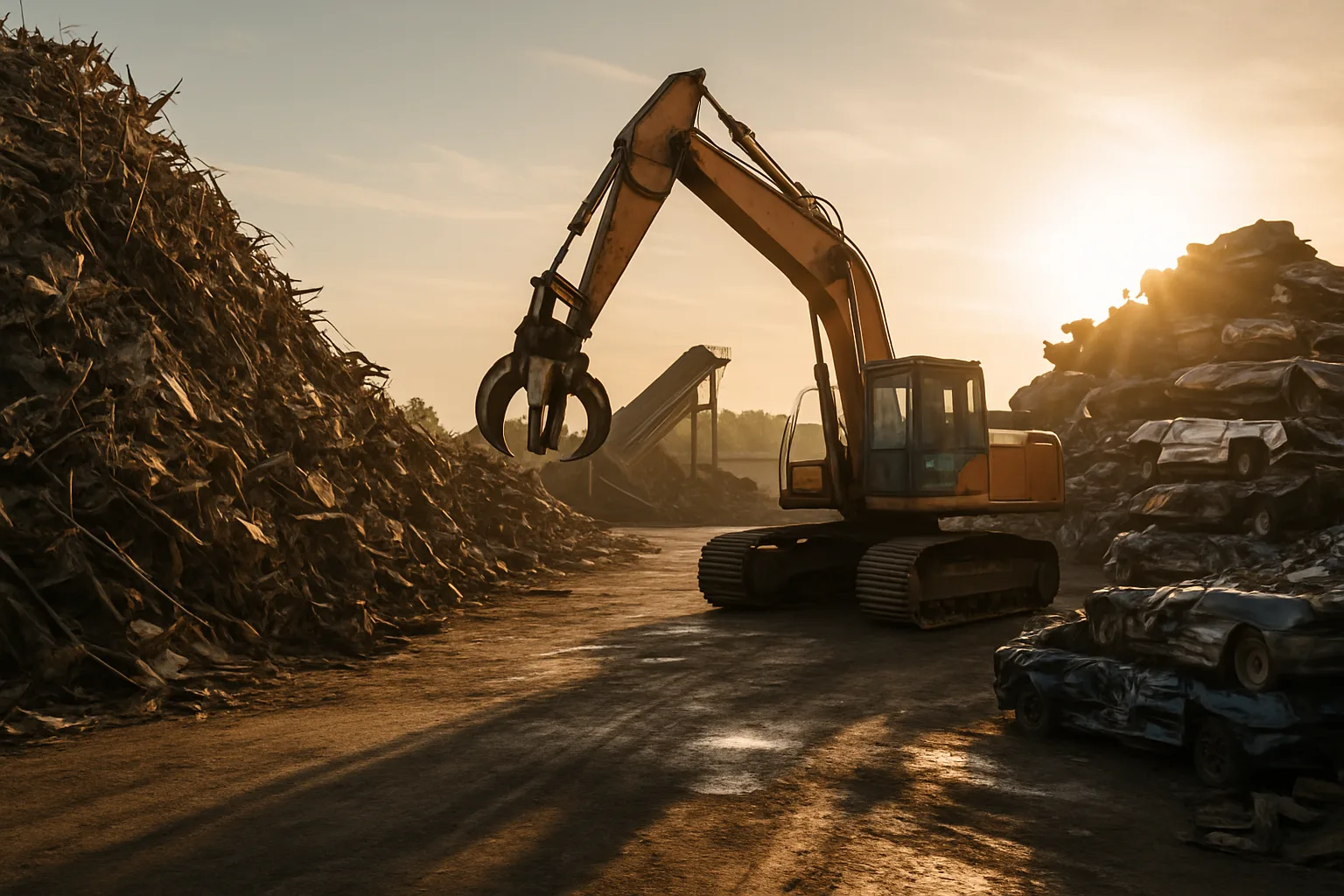
From Assembly Line to Scrap Yard: The Full Life of a Car
Every car on the road right now is slowly becoming scrap metal. That's not pessimism — it's physics, economics, and time working together. The average passenger vehicle in Canada lasts somewhere between 15 and 20 years before repair costs outpace what the vehicle is worth. When that day comes, what happens next matters — for your wallet, for the environment, and for the Canadian metal supply chain.
If you're sitting on an end-of-life vehicle in Yorkton or anywhere across Saskatchewan, understanding this lifecycle isn't just interesting — it helps you make a smarter decision about what your vehicle is actually worth and how to get rid of it without leaving money on the table. free scrap car pickup across Canada from GetMyScrapCar is one of the fastest ways to close that chapter without the hassle.
Stage One: Manufacturing — Where the Metal Begins
A modern passenger car contains roughly 900 to 1,000 kilograms of steel, plus additional aluminum, copper wiring, and various non-ferrous components. Manufacturers source raw ore, smelt it, shape it, coat it, and assemble hundreds of individual parts into something that rolls off a factory floor ready to transport a family across Saskatchewan in comfort.
That initial investment of raw materials is enormous. Which is why the recycling industry exists — those same materials don't disappear when the car stops running. They go back into the supply chain. Steel from scrapped vehicles gets re-melted and reused in construction, appliances, and new vehicles. The whole system is designed to loop, not waste.
- Steel: The dominant material by weight — typically 50–60% of total vehicle mass
- Aluminum: Used in engines, wheels, and hoods — increasingly common in newer models
- Copper: Found in wiring harnesses, electric motors, and onboard electronics
- Platinum group metals: Concentrated in the catalytic converter — often the most valuable single component
- Fluids and rubber: Require careful extraction before recycling begins
Stage Two: Active Life — Years of Use, Then Decline
For most vehicles, the first 10 years are relatively straightforward. Regular maintenance, minor repairs, maybe a fender bender or two. Then things start compounding. Rust accelerates — especially in Saskatchewan, where road salt from winter maintenance seasons accelerates corrosion on frames, wheel wells, and brake lines. Mechanical systems that have cycled thousands of times start to fail in sequence.
The tipping point is different for every owner, but the math tends to converge: when a single repair costs more than the vehicle's market value — or when two or three repairs hit within the same year — most people start doing the math on replacement. That's the beginning of the end-of-life phase, even if the car is still technically drivable.
In 2026, supply chain pressures and higher new vehicle costs have pushed some owners to hold onto aging vehicles longer than they should. The problem is that a car sitting idle still deteriorates — and an outdoor Saskatchewan winter accelerates that deterioration faster than most people expect.
Stage Three: The Decision to Scrap — What Drives It
The decision to scrap rarely happens overnight. It's usually a combination of events:
- A repair estimate that exceeds the vehicle's value — transmission replacements, engine failures, or frame damage commonly trigger this
- Failed safety inspection — a vehicle that can't pass provincial inspection is legally off the road
- Insurance write-off — after a collision, insurers calculate total loss and the vehicle is surrendered
- Simple age and reliability — a vehicle that's become too unreliable to depend on, even for short trips
- No private sale market — high mileage, mechanical issues, or cosmetic damage make private sale impractical
Once you've made the call, the question becomes: how do you extract maximum value from what's left? That's where the process — and platforms built to streamline it — become important. A junk car removal Yorkton service that comes to you, handles the paperwork, and pays fair market value makes the whole thing far less painful than trying to navigate the scrap industry cold.
Stage Four: The Scrap Yard — How Your Car Gets Processed
This is the part most vehicle owners never see. When your car arrives at a licensed auto recycler, the process is systematic and regulated. Fluids come out first — oil, coolant, brake fluid, transmission fluid, and refrigerant are all extracted and disposed of or recycled according to environmental standards. In Saskatchewan, provincial environmental regulations govern this process tightly.
Next, high-value components are pulled for resale. Catalytic converters (cats) are among the most valuable — they contain platinum, palladium, and rhodium. Alternators, starters, usable body panels, intact windows, and sometimes entire drivetrain components get pulled for the used parts market. What remains after parts removal is the stripped hulk — mostly steel — which gets crushed, shredded, and sold by the ton to steel mills.
This is where scrap car value per ton becomes a real number. Steel prices fluctuate with global market conditions. A standard passenger vehicle hulk might weigh 800 to 900 kilograms after fluids and parts removal. At current market rates — which shift regularly based on demand from mills and international buyers — that weight translates into a dollar figure that reputable scrap buyers can quote you before they pick up the vehicle.
For the B2B side of that equation — where yards and buyers are trading larger volumes — Canada's B2B scrap recycling marketplace gives recyclers and buyers a transparent, competitive auction environment. That market efficiency eventually benefits end-of-life vehicle owners too, because better price discovery at the yard level means more competitive quotes flowing back to the source.
Why Yorkton Owners Should Act Before Winter
Saskatchewan winters are not kind to idle vehicles. A junk car sitting on a gravel pad or driveway through freeze-thaw cycles and heavy snowfall degrades faster than you'd think. Rubber seals crack. Battery cells lose capacity. Fluids congeal. Rust accelerates wherever bare metal is exposed.
If you're in Yorkton and you've been putting off the scrap car decision, mid-2026 is a practical time to move. You avoid the complexity of removing a snow-buried vehicle in January, and you get a quote while the vehicle is still in the condition it's in today — not after another Saskatchewan winter finishes with it.
Services like SMASH operate within the broader recycling supply chain to create competition among buyers, which supports better scrap metal recycling Canada-wide. That market competition is part of why the scrap industry has become more transparent over the past decade. Platforms like SMASH make it easier for recyclers and buyers to find each other — and that efficiency flows downstream to vehicle owners who want a fair sell car for scrap quote without having to cold-call three different yards.
When you're ready to move on from your junk vehicle, you can schedule your free scrap car removal and get a quote based on your vehicle's actual condition — make, model, year, and current metal weights. No guesswork, no low-ball offers based on assumptions.
Scrap Metal Recycling in Canada: The Bigger Picture
Canada recycles millions of tonnes of scrap metal annually. End-of-life vehicles represent one of the most significant streams of that material. Steel from scrapped cars re-enters the manufacturing cycle — reducing the need for virgin ore extraction and lowering the carbon footprint of domestic steel production.
The Yorkton scrap metal services sector is part of that national supply chain. Regional yards process vehicles, extract usable materials, and feed into larger industrial buyers. It's a functioning circular economy — one that depends on vehicle owners making the decision to recycle rather than abandon or indefinitely store vehicles that have reached end of life.
For auto recyclers navigating the competitive side of that trade, the SMASH scrap metal auction platform creates price discovery without subscription fees. No yard wins by accepting less than market. No buyer wins by overpaying. Competition does the work. For vehicle owners, knowing that competitive market forces exist is worth understanding — it means the quote you get from a reputable buyer reflects real market conditions, not a single buyer's margin.
If you want to go deeper on the recycling process, read more junk car removal guides to understand how pricing works, what affects your car's value, and what to expect on pickup day.
Your car started as raw steel pulled from the ground. It served its purpose. Now it's ready to go back. Getting that process right — with a licensed buyer, a fair quote, and free towing — is the final decision you make as its owner. Make it a good one. Get a free quote for your scrap car and Yorkton scrap metal services at getmyscrapcar.ca — scheduling free pickup takes minutes, and the vehicle is gone on your timeline.
Frequently Asked Questions
Q: How does free scrap car pickup in Yorkton actually work?
You request a quote online or by phone, provide basic details about your vehicle (year, make, model, and condition), and receive an offer. If you accept, a licensed tow truck picks up the vehicle at no cost to you. Payment is typically issued at pickup or shortly after, depending on the buyer.
Q: Does my car need to run to qualify for junk car removal in Yorkton?
No. Most scrap car removal services in Saskatchewan will pick up vehicles regardless of condition — non-running, heavily damaged, or rusted out. The vehicle's value is based on weight and parts, not whether it drives.
Q: What documents do I need to scrap a car in Saskatchewan?
You'll typically need to provide the vehicle's registration and sign a transfer of ownership. If you don't have the title, contact SGI or your local registry office — requirements vary depending on your situation. A reputable buyer will walk you through the paperwork.
Q: How is scrap car value per ton calculated?
Scrap car value is based primarily on steel weight, with additional value for intact components like the catalytic converter, alternator, or reusable body parts. Steel prices fluctuate based on global commodity markets, so your quote reflects current conditions at the time of pickup. Prices change regularly — always request a current quote rather than relying on older estimates.
Q: Can I scrap a car in Yorkton if I still owe money on it?
If there's an outstanding loan on the vehicle, the lender technically holds an interest in it. You'll need to either pay off the lien or get lender approval before transferring the vehicle for scrap. Most buyers will flag this during the quote process — it's worth disclosing upfront to avoid delays.
Follow SMASH on LinkedIn for weekly scrap metal market updates, industry news, and recycling insights across North America: linkedin.com/company/scrap-metal-auction-sales-hub.