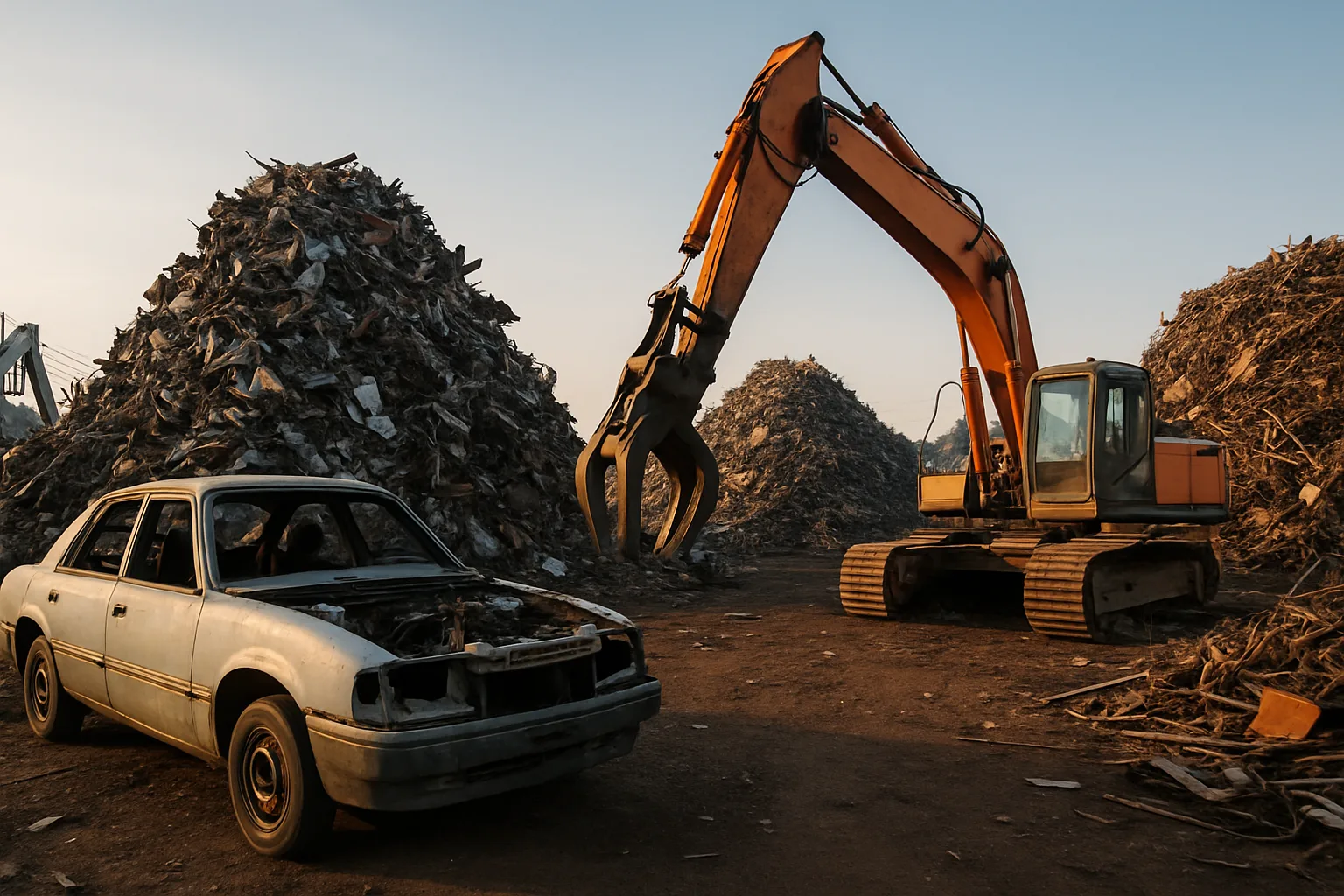
Most people use these three terms interchangeably. That's a mistake that could cost you money. If you're sitting on a dead vehicle in Sudbury and wondering how to get rid of it — and get paid fairly — understanding the difference between a junkyard, a salvage yard, and an auto recycler matters more than you think. The right destination for your car affects what you get paid, how fast the process moves, and whether your vehicle ends up being handled responsibly.
This isn't just semantics. These three operations work differently, serve different purposes, and offer very different experiences for vehicle owners. Let's break it down clearly so you can make a smarter decision about your end-of-life vehicle in 2026.
---What Is a Junkyard — and Is It Still Relevant?
The term "junkyard" is old-school. It conjures images of stacked cars, barking dogs, and a guy in coveralls who hands you $50 cash and doesn't ask questions. Historically, junkyards were exactly that — informal lots where vehicles piled up, parts got picked over, and whatever remained got crushed or left to rust. Regulation was minimal. Environmental oversight was nearly nonexistent.
In 2026 Canada, true junkyards in that traditional sense are largely gone. Environmental regulations across Ontario and the rest of Canada require any facility handling end-of-life vehicles to manage hazardous fluids — oil, coolant, brake fluid, refrigerants — with documented disposal practices. A lot that ignores those rules isn't just running a rough operation; it's operating illegally. What people still call "junkyards" today are usually operating under the same rules as salvage yards or auto recyclers, even if the name hasn't caught up.
The key takeaway: if someone calls their yard a junkyard but can't tell you how they handle fluids or where crushed metal goes, walk away. In Sudbury, there are legitimate operations and there are not-so-legitimate ones. The name on the sign matters less than the practices behind the fence.
---How Salvage Yards Work — Parts First, Metal Second
A salvage yard is a step up in organization. The primary business model here is parts resale. When your car comes in, someone assesses it for usable components — alternators, transmissions, doors, mirrors, engines, catalytic converters (cats), rims, and more. Vehicles with value in parts get inventoried. Buyers come in to pull their own parts, or the yard pulls and ships them.
This is where the money is for the yard. A running engine from a 2018 pickup truck might be worth ten times what the crushed metal from that same truck would bring. So salvage yards are selective. They want vehicles with parts that are in demand. Flood-damaged cars, fire-damaged vehicles, and anything too old or too common to have valuable parts may not interest them at all — or they'll offer you almost nothing.
Here's what that means for you practically:
- If your vehicle has valuable, undamaged components, a salvage yard might offer you more upfront.
- If your vehicle is stripped, heavily damaged, or high-mileage with worn-out parts, they'll lowball you.
- Salvage yards typically aren't in the business of free scrap car pickup in Sudbury — you may need to arrange your own tow.
- Pricing is often based on their assessment of parts value, which is not transparent to you as the seller.
The lack of transparency is a recurring complaint. You're being quoted a price by someone who knows exactly what your car is worth to them — and you're guessing. That's a negotiation you're already losing before it starts.
---Auto Recyclers — The Professional End of the Industry
Auto recyclers are the most regulated and most sophisticated players in this space. In Canada, legitimate auto recyclers operate under provincial environmental standards, maintain proper fluid depollution procedures, and often participate in programs like the Automotive Recyclers of Canada (ARC) certification. When a vehicle arrives at an auto recycler, it goes through a defined process: fluids are drained and collected, hazardous materials are removed, usable parts are catalogued, and what remains goes to metal processing.
This matters for you as a vehicle owner in two ways. First, you're dealing with a business that has accountability. Second — and this is where it gets interesting — auto recyclers are increasingly connected to scrap metal recycling Canada-wide networks and platforms that create actual competition for your material. Instead of one buyer making you one offer, your vehicle's metal value gets exposed to a market.
That's where platforms like SMASH Recycling — where verified buyers bid on your metal change the equation. Auto recyclers who use competitive auction platforms aren't guessing at scrap value — they're discovering it through real buyer competition. That price discovery ultimately benefits the whole supply chain, including vehicle owners who are trying to understand what their car is actually worth in 2026.
If you're in the Sudbury area and researching your options, connecting with services linked to Sudbury scrap metal services gives you access to the professional end of this industry — not the informal end.
---Scrap Car Value: What Actually Determines What You Get Paid
Whether you're dealing with a junkyard, salvage yard, or auto recycler, the underlying math comes from a few key variables. Understanding these helps you evaluate any quote you receive — and recognize when you're being lowballed.
Vehicle weight. Scrap vehicles are ultimately measured in steel. A full-size truck or SUV weighs significantly more than a compact sedan and will yield more metal. Weight is the starting point for any scrap calculation.
Metal markets. Steel, aluminum, copper, and platinum group metals (in catalytic converters) all move with commodity markets. A quote from last month may not reflect today's prices. Prices fluctuate — always check current rates before finalizing a deal. Any service quoting you a firm number without checking current market data is either absorbing the risk or building in a wide margin at your expense.
Parts value vs. scrap value. A running vehicle with a clean engine, good transmission, and undamaged catalytic converters may be worth substantially more as parts than as bulk scrap. If you're only being offered scrap weight pricing on a vehicle with intact, valuable components, push back or get a second opinion.
Convenience and towing. A service that offers free scrap car pickup across Canada from GetMyScrapCar is building towing cost into their offer. That's not a scam — it's business. But you should know that the "free tow" is offset somewhere. What you're trading is convenience for part of the margin. For most people with a non-running vehicle, that trade is worth it.
If you want to ballpark your vehicle's value before reaching out, using a scrap car value calculator Ontario can give you a rough range. Just remember it's a starting point, not a guarantee.
---Which Option Makes Sense for Your Vehicle in 2026?
Here's a practical breakdown based on vehicle condition:
- Running vehicle with good parts: A salvage yard or auto recycler with a parts-first model may offer you more. Worth shopping around before committing.
- Non-running, damaged, or high-mileage vehicle: Scrap metal value is the primary driver. Focus on services that offer transparent pricing and free pickup — junk car removal in Sudbury services that include towing make this category painless.
- Vehicle with valuable cats or non-ferrous metals: Make sure whoever is buying your car accounts for these separately. Platinum group metals in catalytic converters have real value. A blanket scrap-by-weight offer ignores this.
- Any vehicle in Ontario: Work with a service that follows provincial depollution standards. You're not just protecting the environment — you're protecting yourself from liability if the vehicle is improperly handled after you sell it.
For most everyday vehicle owners, an auto recycler connected to a transparent buying process is the right call. Services like schedule your free scrap car removal at GetMyScrapCar connect you to this professional tier without making you do the legwork.
And behind the scenes, platforms like SMASH are what make pricing more honest. When verified buyers compete for scrap loads through an auction format — rather than a single buyer making a take-it-or-leave-it call — price discovery actually works. More competition means better information. Better information means fairer offers.
---Don't Leave Money on the Table — Understand Your Options Before You Call
The difference between a junkyard, salvage yard, and auto recycler isn't just industry jargon. It's a real spectrum from informal and opaque to professional and accountable. Where your vehicle ends up on that spectrum affects what you're paid, how fast it happens, and whether the process is documented properly.
If you're in Sudbury or anywhere across Ontario, you have access to professional-grade scrap car removal that doesn't require haggling with a single buyer on the phone. The industry has changed. Competition and transparency are available to vehicle owners now — you just have to know where to look.
Want to go deeper on the process? Read more junk car removal guides on the GetMyScrapCar blog to understand pricing, timing, paperwork, and more before you make your call.
If you're ready to move your vehicle, get a free quote and schedule free pickup at getmyscrapcar.ca. No guessing. No pressure. Just a straightforward process handled by people who know the industry.
---Frequently Asked Questions
Q: What is the difference between a salvage yard and an auto recycler in Ontario?
A salvage yard focuses primarily on reselling usable parts from vehicles before scrapping what's left. An auto recycler operates under stricter environmental standards, documents fluid depollution, and processes vehicles more systematically. In Ontario, licensed auto recyclers follow provincial regulations that informal salvage operations may not always meet. For vehicle owners, auto recyclers generally offer a more transparent and accountable process.
Q: Is free scrap car pickup in Sudbury really free?
Yes — most reputable junk car removal services in Sudbury include towing at no charge to you. The cost of towing is factored into their offer for the vehicle. For a non-running car with scrap value, this trade-off is almost always worth it. You avoid towing costs and get the vehicle off your property without doing any of the legwork yourself.
Q: How do I know what my scrap car is worth before I call?
Start with a scrap car value calculator Ontario to get a ballpark range based on vehicle make, model, year, and weight. Keep in mind that metal markets shift — what a calculator shows today may differ from live offers next week. Always get at least two quotes and ask specifically how the buyer is accounting for valuable components like catalytic converters or intact non-ferrous metals.
Q: Do I need to remove my license plates before scrapping my car in Ontario?
Yes. In Ontario, you are required to remove your license plates before transferring or scrapping your vehicle. Plates belong to you, not the car — you can return them to a ServiceOntario location and potentially receive a plate sticker refund for unused months on your registration. Always cancel your insurance once the vehicle has been transferred as well.
Q: Why does it matter which type of facility handles my end-of-life vehicle?
Improper handling of end-of-life vehicles can create environmental liability — and in some cases, if a vehicle is linked back to you after disposal, that's a problem you don't want. Licensed auto recyclers in Ontario follow documented depollution procedures for oil, coolant, refrigerants, and other hazardous fluids. Using a reputable, regulated service protects you and ensures the vehicle is handled responsibly. It also tends to mean more competitive, transparent pricing.
---Stay current on scrap metal markets and industry news — follow SMASH on LinkedIn for regular updates on pricing trends, platform news, and insights from across the North American scrap metal industry.