Most people hand over their keys, watch the tow truck pull away, and never think about what happens next. But understanding what auto recyclers actually do with your vehicle can help you make smarter decisions — including knowing why scrap car removal Mississauga residents count on isn't just about free towing. It's about what comes after the pickup that determines real value.
Your old car doesn't just disappear. It enters a structured process that strips, sorts, resells, and recycles nearly everything. And if you know how that process works, you'll understand why your vehicle is worth more than you might think — and how to make sure you're getting a fair price for it.
Step One: The Vehicle Arrives at the Recycling Facility
When your car gets dropped at an auto recycler, the first thing that happens is an intake assessment. A yard worker logs the vehicle — make, model, year, VIN — and does a quick visual inspection. They're looking at condition, completeness, and whether the car has parts worth pulling before it gets crushed.
In Mississauga and across Ontario, licensed auto recyclers are required to track incoming vehicles and report them to provincial systems designed to prevent stolen vehicle parts from entering the supply chain. This is why reputable services ask for proof of ownership before pickup. It's not bureaucracy for its own sake — it protects you legally and keeps the industry clean.
- VIN is logged and verified against stolen vehicle databases
- Weight is recorded — this directly affects your payout
- Condition is graded to determine whether the car goes to parts or straight to the crusher
- Fluids are flagged for environmental handling
Depollution: The Step Everyone Forgets About
Before anything else happens to your vehicle, it gets depolluted. This is a regulated step that every licensed facility in Ontario must complete before a vehicle is crushed or dismantled for parts. Skipping it is illegal, and for good reason — a single car contains several hazardous materials that can cause serious environmental damage if handled carelessly.
Here's what gets drained and removed during depollution:
- Engine oil — typically 4–6 liters per vehicle
- Coolant and antifreeze
- Transmission fluid and power steering fluid
- Brake fluid
- Gasoline — siphoned from the tank
- Air conditioning refrigerants — recovered with certified equipment
- Battery acid — the 12V battery is removed and recycled separately
- Mercury switches — still present in older vehicles, particularly pre-2003 models
All of these materials are captured, stored, and sent to certified waste processors. Reputable recyclers document this process. If a buyer can't show you they're licensed and compliant, that's a red flag — both for you and for the environment.
Parts Harvesting: Where Your Car's Real Value Lives
Once a vehicle is depolluted, experienced dismantlers assess which parts are worth pulling before the body goes to the shredder. This is where junk car prices today get complicated — because a 2015 pickup with a good transmission is worth a very different amount than a 2008 sedan with a seized engine and no catalytic converter.
High-value parts typically pulled before crushing include:
- Catalytic converters — contain platinum, palladium, and rhodium, making them among the most valuable components on any vehicle
- Engines and transmissions — if functional or rebuildable
- Alternators and starters
- Doors, hoods, and body panels — for collision repair shops
- Wheels and tires — if in usable condition
- Radios, GPS units, and electronic modules
- Seats and interior trim — for vehicles in good shape
Dismantlers who know what they're doing can pull considerable value from a vehicle that most people would dismiss as a pile of junk. This is exactly why how much is my car scrap value is such a common question — and why the answer varies so much depending on who's buying and how well they know the market.
Platforms like SMASH help bring competitive bids for your scrap in Canada into the picture. When buyers compete for your vehicle or its components, price discovery improves. That means you're less likely to leave money on the table by accepting the first number someone throws at you.
The Crusher: What Happens to the Body Shell
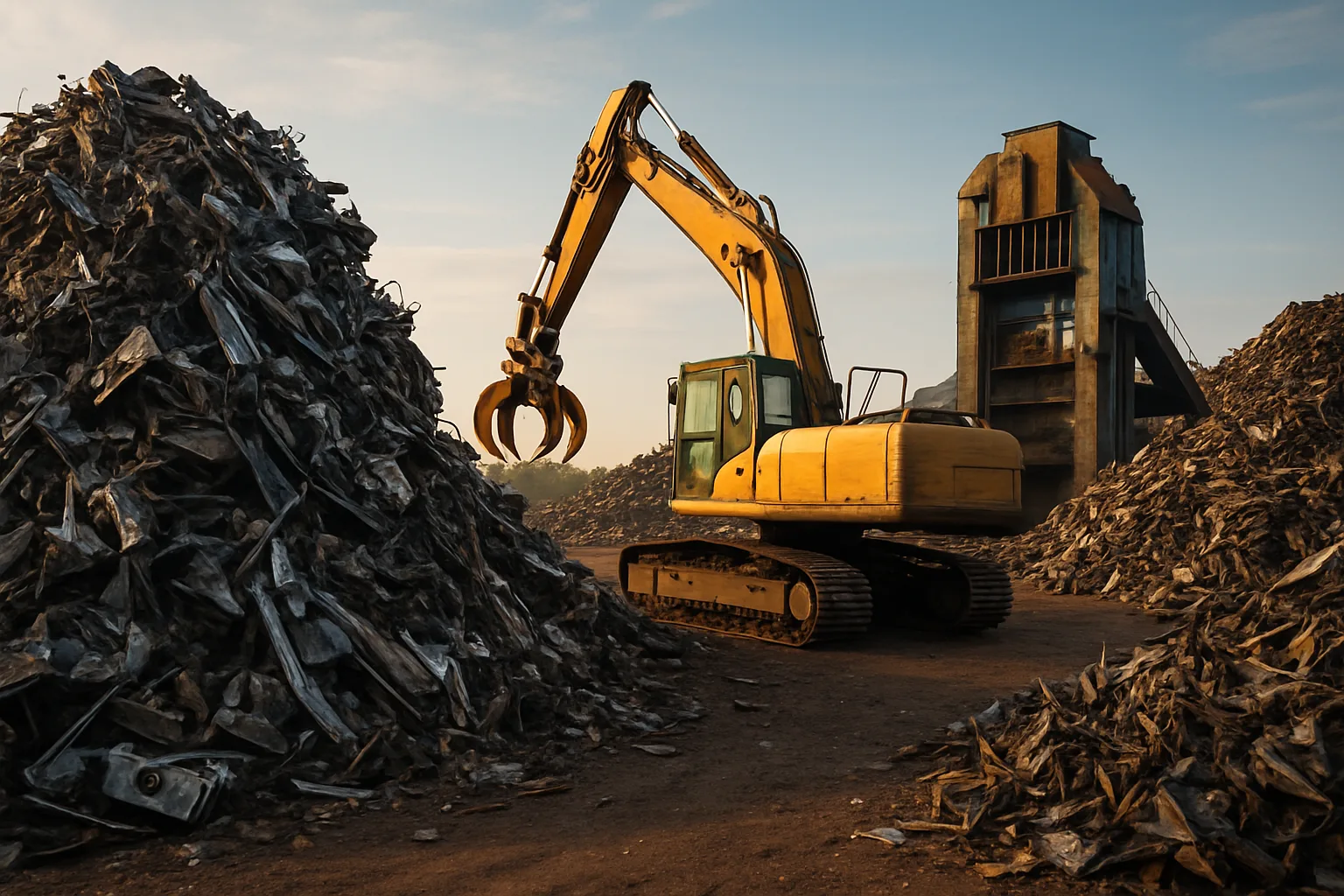
After parts are pulled, what's left — the bare metal shell — goes to the crusher or the shredder. Most large recycling operations in Ontario use industrial shredders that can process dozens of vehicles per hour. The shredded output is sorted by metal type using magnets, eddy current separators, and air classifiers.
Ferrous metal (steel and iron) makes up the bulk of the shredded material. Non-ferrous metals — aluminum, copper, brass — are separated out because they command significantly higher prices per pound. A modern vehicle contains roughly 50–70 pounds of aluminum depending on the model, and that aluminum heads to a smelter to be recycled into new products.
The shredded steel ends up at steel mills, where it's melted down and re-rolled into new sheet metal, rebar, or structural steel. On a long enough timeline, your old Mississauga beater might end up as part of a new building somewhere across Ontario — or a new car on a production line.
This is where the B2B side of the recycling chain really matters. Shredded material doesn't just get sold to whoever calls first — or at least it shouldn't. A B2B scrap metal marketplace creates real competition for those loads, which moves prices closer to what the market actually supports. Without competition, yards accept whatever the single buyer offers. With it, price discovery works the way it's supposed to.
How Your Payout Is Calculated — and Where It Goes Wrong
When you sell a scrap car, you're typically paid based on vehicle weight multiplied by the current scrap steel price, adjusted for condition and completeness. But that's the simple version. The real calculation involves several factors that most sellers never see.
Here's what affects your actual payout:
- Current steel prices — scrap metal prices fluctuate weekly based on global demand, energy costs, and market conditions. What you get quoted today might be different next week. Always check current rates before you commit.
- Vehicle weight — a full-size truck weighs dramatically more than a compact sedan, which translates directly into dollars
- Catalytic converter presence — vehicles missing their cats take a significant hit in value
- Parts demand — some makes and models have high parts demand, which means the recycler can extract more value and may pay more upfront
- Completeness — missing wheels, engine components, or doors affects value
- Location and towing cost — free towing is standard for most services, but it's factored into the offer
This is why searching for junk car buyers near me Mississauga and comparing multiple offers is always worth doing. One buyer's quote can vary substantially from another's — not because someone is dishonest, but because different operations have different buyer networks, different parts markets, and different overhead.
SMASH exists specifically to address this gap. Rather than accepting a single offer and hoping for the best, free scrap car pickup across Canada from GetMyScrapCar connects your vehicle to a process built around transparency — so you know what you're getting and why.
What Mississauga Sellers Should Know Before Booking Pickup
If you're in Mississauga or anywhere in Ontario and you're ready to move a junk car, a few practical steps protect your interests and speed up the process.
Have your ownership paperwork ready. You'll need to sign over the title. In Ontario, this means your vehicle permit. Without it, legitimate recyclers won't process the sale — and ones who do should raise your suspicion.
Remove personal items before pickup. Once the car leaves your driveway, getting anything back is nearly impossible. Check under seats, in the trunk, and in the glovebox.
Cancel your insurance and plates before or on the day of pickup. Ontario law requires you to surrender your plates when a vehicle is sold or scrapped. Leaving them on creates liability.
Get your quote in writing. Verbal offers change. A documented quote — even by email — gives you something to stand on if the number shifts at pickup.
Don't drain fluids yourself. It's tempting, but licensed recyclers are required to handle depollution. Draining fluids yourself could actually reduce your offer if the facility has to account for incomplete fluid recovery documentation.
When you're ready, schedule your free scrap car removal through GetMyScrapCar — it's straightforward, there's no subscription or hidden fee, and the process is built around getting you a fair outcome without the runaround.
For more practical guides on navigating the scrap car process across Canada, read more junk car removal guides on the GetMyScrapCar blog.
Disclaimer: Scrap metal and vehicle prices fluctuate based on market conditions. Always verify current rates before accepting or committing to any offer.
Frequently Asked Questions
Q: How long does scrap car removal in Mississauga take from booking to pickup?
Most reputable services can arrange pickup within 24–72 hours of booking. Same-day pickup is sometimes available depending on your location in Mississauga and the service's current schedule. Have your ownership documentation ready to avoid delays.
Q: Do I need to be home when the tow truck arrives for scrap car removal?
Most services require someone to be present to sign over the vehicle ownership and receive payment. Confirm with your provider ahead of time — some services allow a designated representative to handle the handover if you can't be there personally.
Q: What affects junk car prices today in Mississauga?
Current scrap steel prices, your vehicle's weight, whether the catalytic converter is intact, parts demand for your specific make and model, and the overall condition of the vehicle all play a role. Prices fluctuate regularly — always get a current quote rather than relying on old information.
Q: Will I get more money if my car still runs versus if it doesn't?
Not necessarily more money at the scrap yard — weight and metal content drive most of the payout. However, a running vehicle may have higher-value parts that a dismantler is willing to pay a premium for. It's worth mentioning if the engine starts when you get your quote.
Q: Is scrap car removal in Mississauga really free, or are there hidden fees?
Legitimate services offering free towing mean exactly that — no charge for pickup. The towing cost is factored into the recycler's margin on the vehicle, not passed to you as a separate fee. Read any quote carefully and ask specifically whether towing is included before confirming your booking.
If you've got a junk car sitting in your driveway in Mississauga or anywhere across Canada, the smartest move is to get a real quote from people who know the market. GetMyScrapCar handles the pickup at no cost to you — and the process is transparent from start to finish. Head to getmyscrapcar.ca to get your free quote and schedule removal on your timeline.
Stay current on scrap metal market trends and industry news by following SMASH on LinkedIn — useful intel whether you're scrapping one car or managing a full yard operation.