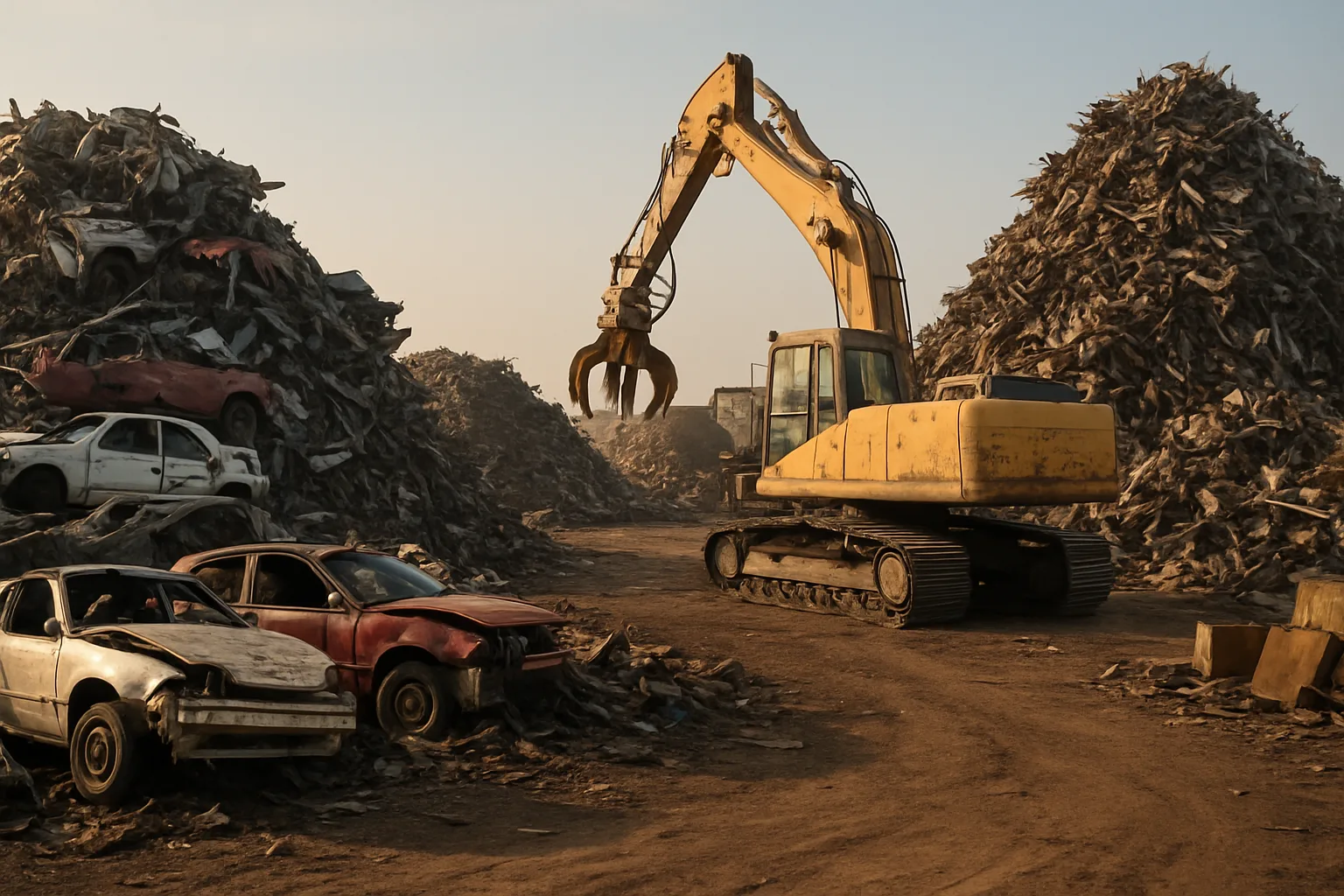
Most people assume a scrap car is worth the same as any other scrap car. Same weight, same steel, same price. That assumption costs vehicle owners real money every single time.
The truth is, scrap car prices vary — sometimes significantly — based on your vehicle's make, model, condition, and what's still intact under the hood. A 2010 Honda CR-V sitting in a Kelowna driveway can fetch a very different number than a 2006 Ford F-150 in similar shape, even if they weigh roughly the same. Understanding why that gap exists helps you make smarter decisions before you hand over your keys.
This is a real-world breakdown of what drives those price differences — and how to make sure you're not leaving money on the table when you book free scrap car pickup across Canada from GetMyScrapCar.
Why Make and Model Matter More Than You Think
Scrap yards and auto recyclers don't just weigh your car and write a cheque. They're evaluating salvage value alongside scrap metal weight. And salvage value is heavily tied to what parts your specific make and model carries — and how much demand those parts have in the secondary market.
Popular vehicles hold an advantage here. High-volume makes like Toyota, Honda, Ford, and GM tend to have strong part demand because there are millions of those vehicles still on the road needing repairs. A 2012 Toyota Camry, even stripped and rusted, may still carry usable sensors, trim pieces, alternators, or door panels that a recycler can pull and resell. That resale potential gets factored into your offer.
- High-demand makes: Honda, Toyota, Ford, Chevrolet, Dodge — consistent part demand across Canada
- Lower-demand makes: Discontinued models, certain European imports, or vehicles with poor parts availability
- Trucks and SUVs: Generally heavier (more steel) and often carry high-value components like 4WD systems, tow packages, and larger engines
- Compact sedans: Lighter, but popular models often have strong part demand that compensates
This is why a blanket quote from a single buyer rarely reflects true market value. Different recyclers have different inventory needs. One yard might desperately need Honda Civic parts this month. Another is fully stocked. That's exactly why competitive pricing — the kind that comes from multiple buyers evaluating your vehicle — produces better outcomes for sellers.
How Vehicle Condition Shifts the Number
Condition affects your scrap car price in two distinct ways: it impacts parts value and it impacts scrap metal recovery. A car that's been sitting for five years in a British Columbia interior climate — exposed to dry summers and cold winters — tells a very different story to a buyer than one that ran fine until last month.
Here's what recyclers are actually assessing when they look at condition:
- Does it run or drive? A running vehicle often commands a premium because it's easier to move, inspect, and part out. Even minor runnability can add value.
- Is the catalytic converter intact? Cats contain platinum, palladium, and rhodium. A missing or aftermarket cat can reduce your offer noticeably — the OEM catalytic converter is one of the highest-value single components on most vehicles.
- Engine and transmission condition: A seized engine changes the calculation. A functional powertrain — even in a wrecked vehicle — has real resale value to rebuilders and repair shops.
- Body and structural damage: Heavy collision damage limits what can be safely salvaged. Fire damage is even more restrictive — it compromises both parts and the quality of scrap metal recovery.
- Completeness: Missing wheels, stripped interiors, and removed batteries all reduce offer value. Buyers are pricing what's actually there.
None of this means a damaged car is worthless. It absolutely isn't. But it does mean the quote you get should reflect your vehicle's actual state — not a generic number pulled from thin air. Accurate documentation of what your car still has is what drives honest, competitive offers.
The Role of Scrap Metal Inventory Management in Getting You a Fair Price
Here's where the process matters as much as the vehicle itself. When you call a single junk car buyer and accept their first number, you're essentially trusting that one buyer to give you a fair market price. That's the old way. It works in their favour, not yours.
Platforms like find the best price for your scrap in Canada through SMASH operate differently. The vehicle's details — make, model, year, condition, what components are present — get documented and presented to multiple vetted buyers simultaneously. Buyers compete. You see what the actual market is willing to pay for your specific vehicle, not a lowball number from whoever picked up the phone.
Strong scrap metal inventory management is the backbone of this. When a vehicle is properly documented — photos, VIN, condition notes, component checklist — buyers can price it accurately and confidently. Confident buyers bid more aggressively. Vague listings with no photos and a rough description do the opposite. They create uncertainty, and buyers build that uncertainty into a lower offer to protect themselves.
If you're in Kelowna and have a junk vehicle sitting on your property, the difference between a rushed phone-in quote and a properly documented competitive listing can be meaningful. You don't know until you let buyers compete for it.
Kelowna and British Columbia: Local Factors That Affect Your Scrap Car Value
Geography plays a quiet but real role in scrap car pricing. In Kelowna and across British Columbia, a few regional factors shape what local recyclers and buyers are willing to pay.
Distance to processing facilities: Kelowna sits in the Okanagan interior. Transport costs to major shredders are a factor in buyer margins, which can influence offers compared to vehicles closer to large Metro Vancouver recycling hubs. That said, active buyer competition can offset this — it's still worth getting multiple bids rather than assuming the first offer is the ceiling.
Road salt and rust patterns: Unlike coastal British Columbia, the Okanagan interior is drier. Vehicles in Kelowna often show different rust profiles than those from wetter coastal or northern regions. Less underbody corrosion can mean more salvageable components — a real plus when buyers are assessing part value.
Seasonal demand: Scrap metal markets fluctuate year-round. Demand patterns shift with construction activity, export cycles, and commodity pricing. Timing your sale during periods of active buyer demand can make a difference. SMASH tracks market conditions so sellers aren't flying blind.
You can explore Kelowna scrap metal services to understand what's available in your area and how to connect with local buyers who are actively looking for vehicles.
What Actually Happens When You Get the Pricing Right
Consider this scenario. Two vehicle owners in Kelowna each have a 2009 Dodge Grand Caravan they want to scrap. One calls a single buyer, accepts a fast quote, and books removal that afternoon. The other takes fifteen minutes to document the van — photos, confirms the cat is present, notes the engine runs — and submits it for competitive bidding through a platform with multiple vetted buyers.
The second owner isn't guaranteed a higher number. But they're far more likely to see what the market actually values their vehicle at. Competition creates price discovery. A single call creates a single opinion.
This is exactly the model SMASH built its platform around. No subscription fees. No commitment until an offer works for you. The platform only wins when sellers do. That alignment matters — it means there's no incentive to push a lowball deal just to close quickly.
For anyone serious about getting a fair number for a junk vehicle, the starting point is accurate documentation and competitive exposure. Not a single phone call to whoever ranks first on Google.
How to Prepare Your Scrap Car for the Best Possible Offer
You don't need to detail the car or fix anything. But a little preparation before you request removal or submit for quotes genuinely pays off.
- Locate your title or ownership documents. A clear title speeds up the process and removes buyer uncertainty.
- Take honest photos. All four sides, engine bay, interior, undercarriage if accessible. Buyers want to see what they're pricing.
- Confirm what's still there. Catalytic converter, battery, wheels, spare — note what's present and what's missing. Surprises at pickup create disputes.
- Check for personal belongings. Registration, insurance papers, toll tags, garage openers. Get them out before the vehicle leaves.
- Know your VIN. It's on the dash, driver-side door jamb, or ownership documents. It tells buyers a lot about the vehicle's exact specifications — engine size, trim level, factory options.
Once you're ready, schedule your free scrap car removal and let the buyers come to you. Free towing is standard — you shouldn't be paying out of pocket to get rid of a vehicle that still has market value.
For more guidance on how the process works and what to expect, read more junk car removal guides on the GetMyScrapCar blog.
If you're ready to stop guessing what your vehicle is worth and start seeing real numbers, get a free quote today. GetMyScrapCar connects you with buyers across Canada — and free pickup means no hidden costs eating into your return. Head to getmyscrapcar.ca and get the process started. It takes minutes, and your vehicle may be worth more than you think.
Frequently Asked Questions
Q: How much can I get for my scrap car in Kelowna?
Prices vary based on your vehicle's make, model, year, weight, and condition — including whether key components like the catalytic converter are still present. There's no single universal number, which is why getting competitive quotes from multiple buyers is the best way to understand what your specific vehicle is actually worth in the current market.
Q: Does it matter if my car doesn't run when scrapping it in Kelowna?
Non-running vehicles are scrapped every day — it's not a dealbreaker. You'll typically receive a lower offer than a running vehicle, since fewer buyers can use it for part resale. Free towing is still standard, so you won't pay out of pocket to have it removed.
Q: Who are the best junk car buyers near me in Kelowna?
The best buyer isn't always the first one you find — it's the one competing against other vetted buyers for your vehicle. Platforms that expose your listing to multiple recyclers and auto buyers give you a better chance of seeing fair market value rather than the first number someone is willing to say over the phone.
Q: How does scrap metal inventory management affect what I'm paid?
When your vehicle is properly documented — photos, VIN, condition notes, component checklist — buyers can price it accurately and bid with confidence. Vague listings create uncertainty, and buyers lower offers to compensate for risk. Better documentation almost always leads to stronger, more competitive bids.
Q: Is free towing actually free when I scrap my car in British Columbia?
Yes — legitimate scrap car removal services in British Columbia include free pickup as part of the offer. You should never be asked to pay towing fees upfront. If a buyer tries to deduct towing from your quote without disclosing it in advance, that's a red flag worth paying attention to.
Follow SMASH on LinkedIn for scrap metal market updates, industry insights, and tips on getting the most from your next load.