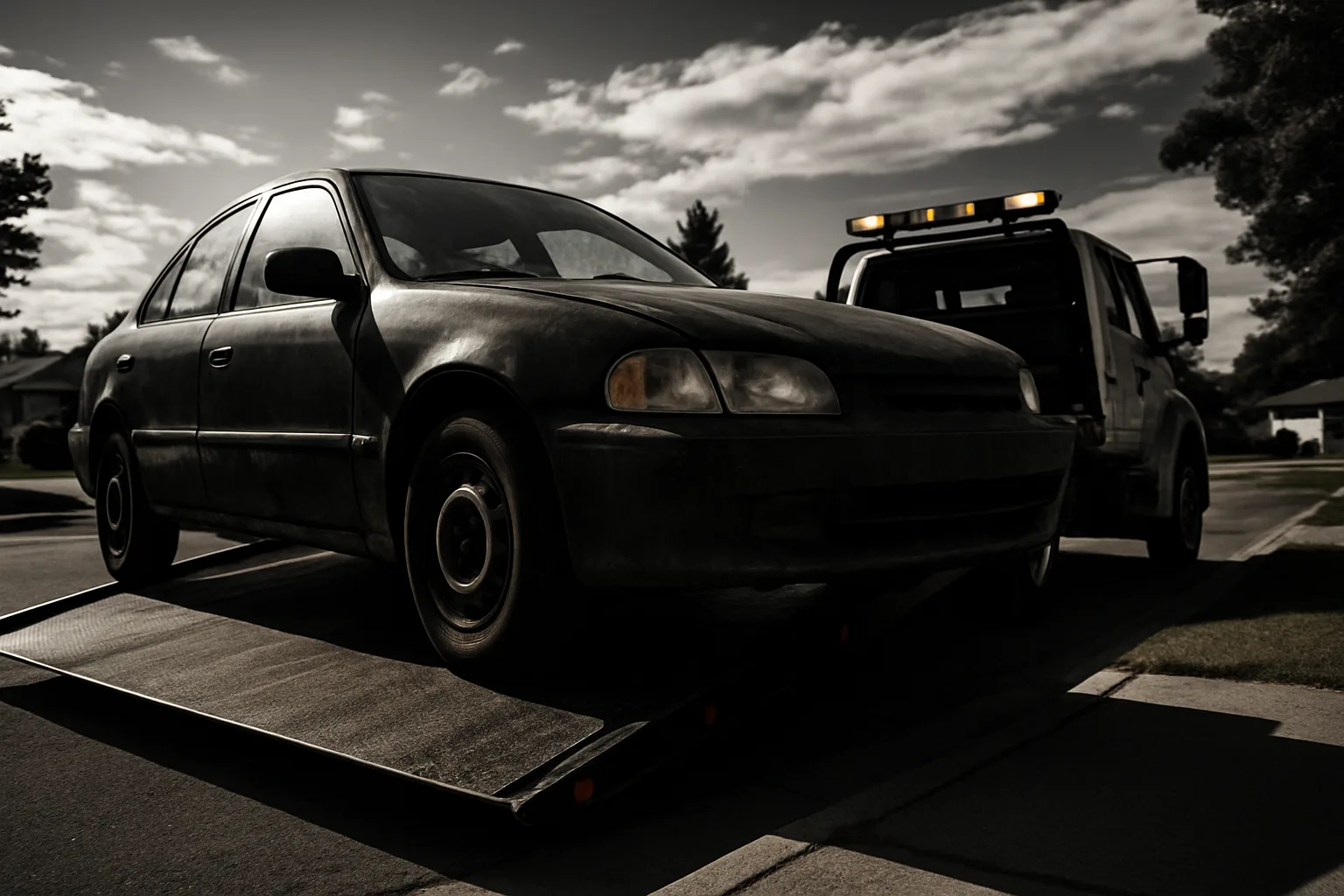
Junkyard, Salvage Yard, or Auto Recycler — Does It Actually Matter Where You Sell Your Scrap Car?
Here's something most vehicle owners get wrong: they assume a junkyard, a salvage yard, and an auto recycler are all the same thing. They're not. And the difference can have a real impact on your scrap car value today — especially if you're in a market like Kamloops, where your options aren't as concentrated as they are in a major metro. Knowing which type of facility you're dealing with changes what you're offered, how fast the process moves, and whether you're leaving money on the table.
This isn't about splitting hairs on terminology. It's about understanding who you're selling to, what they actually want from your vehicle, and how to make sure you're not underselling a car that's worth more than scrap weight. Let's break it down clearly.
What Is a Junkyard? (And Why It's Not Always Your Best Option)
The word "junkyard" is the oldest and most informal of the three terms. Traditionally, a junkyard is a facility that accepts end-of-life vehicles, stripped or whole, and pays based primarily on the vehicle's scrap metal weight. Think crushed cars in rows, stacked high, destined for a shredder. The business model is simple: buy low by weight, sell the metal bulk to a processor or mill.
Junkyards typically move fast. They'll take your car with minimal questions, offer cash, and arrange towing. What they don't usually do is assess the vehicle's parts value before making you an offer. If your 2012 F-150 has a functional engine, a working transmission, or a cab with intact airbags, a straight junkyard quote may not reflect any of that. You get paid for steel weight. Period.
- Payment is based on scrap metal weight, not parts value
- Fast transactions, often same-day or next-day pickup
- Minimal inspection of vehicle condition or components
- Works well for truly stripped, crushed, or fire-damaged vehicles
- Not ideal if your car still has resalable parts
For a vehicle with zero remaining value beyond its metal content, a junkyard can be perfectly fine. But if you're in Kamloops with a truck or SUV that has usable components, you may want to look further before you commit.
What Is a Salvage Yard? (Parts First, Metal Second)
A salvage yard operates on a fundamentally different model. These facilities buy end-of-life or damaged vehicles with the intention of dismantling them and reselling usable parts — before anything goes to the shredder. Engines, transmissions, axles, mirrors, doors, catalytic converters, alternators — all of it gets assessed, pulled, catalogued, and sold to mechanics, body shops, and DIY repair customers.
Because a salvage yard extracts more value from each vehicle, they can often pay more than a straight junkyard quote. However, they're also more selective. A vehicle that's rusted through, flood-damaged, or mechanically stripped may not interest them at all, or they'll offer junkyard-level pricing regardless. The condition and make/model of your vehicle matters significantly. High-demand vehicles — late-model trucks, crossovers with widely used engines — command better offers at a salvage yard than a 2004 sedan with 280,000 km.
- Focuses on reselling usable parts before scrapping the remainder
- Higher potential payout for vehicles with intact mechanical components
- Selective — not every vehicle qualifies for parts-value assessment
- Makes/models in high local demand will attract stronger offers
- Process may take slightly longer due to vehicle inspection
In British Columbia, salvage yards are regulated under provincial guidelines that govern how vehicles are dismantled and how hazardous fluids are handled. This is worth knowing — a reputable salvage yard follows proper depollution procedures. That matters both environmentally and for your peace of mind when transferring ownership of a vehicle.
What Is an Auto Recycler? (The Most Comprehensive Option)
An auto recycler is the most full-service version of the three. They combine the parts-resale model of a salvage yard with proper environmental compliance, organized inventory systems, and often a more formal process for valuing your vehicle. Many auto recyclers are certified under provincial or national programs that require documented fluid removal, refrigerant recovery, and responsible disposal of hazardous materials before any vehicle gets shredded.
Auto recyclers in Canada — including those operating in British Columbia — often use digital inventory tools to track parts, VINs, and vehicle condition. This matters for the seller because it means the facility has the infrastructure to properly assess what your vehicle is worth beyond its steel weight. They're not guessing. They have data on what parts are moving, what buyers are paying, and what your specific make and model contributes to their inventory.
This is also where platforms like SMASH become relevant. When a recycler lists scrap loads or non-ferrous materials through a structured marketplace, they get competitive bids from vetted buyers rather than relying on a single phone call to a regional mill. That upstream competition in how recyclers sell their recovered materials can influence what they're willing to pay at the intake point — meaning your vehicle. Find the best price for your scrap in Canada by understanding where your car fits in the recycling chain.
- Full environmental compliance — depollution, fluid removal, refrigerant recovery
- Organized digital inventory using VIN tracking and part cataloguing
- Capable of assessing both parts value and scrap metal value simultaneously
- Often provides documented transfer of vehicle ownership and deregistration support
- Best choice for maximizing total recovery value from your end-of-life vehicle
How Scrap Car Value Today Is Determined — And Why the Facility Type Changes Everything
Understanding scrap car value today means understanding that it's not a single number. It's a combination of factors — and different facility types weight those factors differently. A junkyard looks at your vehicle's curb weight and current steel prices. A salvage yard looks at parts demand in the local market. An auto recycler looks at all of the above, plus the value of the non-ferrous materials (copper wiring, aluminum components, catalytic converter substrate) and compliance documentation.
Steel prices fluctuate based on global market conditions. Non-ferrous metals like copper and aluminum are priced independently and can swing significantly. The platinum-group metals inside your catalytic converter — palladium, platinum, rhodium — are among the most volatile commodities in the recycling chain. In Kamloops and across British Columbia, the value you receive for your scrap vehicle will reflect local market conditions, the current commodity price environment, and which type of facility is buying from you.
This is exactly why competitive price discovery matters. When you schedule your free scrap car removal, you want the process backed by real market data — not a single buyer making you a take-it-or-leave-it offer with no transparency. Platforms like SMASH bring multiple vetted buyers into competition for scrap loads, which creates better transparency across the recycling chain.
Disclaimer: Scrap metal and vehicle prices fluctuate based on commodity markets and regional demand. Always verify current rates before committing to a sale.
Sell Scrap Car in Kamloops — Which Type of Facility Should You Use?
If you're looking to sell your scrap car in Kamloops, you're working in a mid-sized interior British Columbia market. That means you have access to legitimate recyclers and salvage operations, but you won't have the same density of competition that you'd find in Metro Vancouver. This makes it even more important to understand what type of facility you're contacting — and to get more than one quote before you agree to anything.
Here's a practical guide for Kamloops vehicle owners:
- Assess your vehicle honestly. Is it running? Does it have intact mechanical components? Or is it a rusted-out shell? Your honest answer determines which facility type is most likely to give you a fair offer.
- Contact an auto recycler first. They have the broadest capability to value your vehicle across multiple categories. Use Kamloops scrap metal services to find vetted local options.
- Get a second quote from a salvage yard if your vehicle has usable parts. Compare the two numbers.
- Don't default to the junkyard unless your vehicle is truly stripped. The speed isn't worth underselling a vehicle with real remaining value.
- Confirm towing arrangements upfront. Many reputable services offer free towing as part of the pickup process — you shouldn't be paying to have your car removed.
- Verify deregistration. Whichever facility takes your vehicle, confirm they handle the paperwork. You don't want liability on a vehicle that's no longer yours.
If you want the process handled start to finish without the guesswork, free scrap car pickup across Canada from GetMyScrapCar is built exactly for that. No phone-tag, no mystery pricing, no towing fees eating into your payout.
Why Scrap Metal Inventory Management and Buyer Competition Change Your Outcome
There's a layer to this conversation that most vehicle owners never see: what happens after your car leaves the facility. The price a recycler offers you is partially determined by what they expect to recover when they sell the processed materials downstream. If a recycler is locked into a single buyer relationship — one mill, one metals broker, one phone call — their margins are squeezed, and that squeeze travels upstream to your quote.
Modern scrap metal inventory management and competitive auction platforms change that dynamic. When a recycler can document their loads accurately — weight, grade, content — and put that inventory in front of multiple vetted buyers simultaneously, they recover more. SMASH operates exactly this way: documented inventory, serial and VIN tracking, photo documentation, and a vetted buyer network that creates real competition for every load. That's the SMASH scrap metal auction model, and it shifts pricing power toward the seller.
For vehicle owners, this matters indirectly but meaningfully. The healthier a recycler's downstream margins, the more competitive they can be at the intake point. Understanding this chain helps you ask better questions when you're getting quotes — and it's why working with connected, tech-enabled recyclers tends to produce better outcomes than walking into the nearest yard and taking whatever number they hand you.
For more practical guidance on navigating the scrap and recycling process, read more junk car removal guides covering everything from paperwork to pricing.
If you're ready to stop guessing and get a real number for your end-of-life vehicle, the process is straightforward. Get a free quote for your scrap car — and schedule your free scrap car removal through GetMyScrapCar. Whether your car is a runner, a project gone cold, or a rusted-out shell sitting in your driveway, the right facility and the right process make a difference.
Frequently Asked Questions
Q: What's the difference between a salvage yard and an auto recycler?
A salvage yard focuses primarily on reselling usable parts before scrapping the remainder of the vehicle. An auto recycler does the same but typically operates under stricter environmental compliance standards, uses digital inventory systems, and processes the full vehicle more systematically — including proper fluid removal and non-ferrous material recovery. Auto recyclers are generally the more comprehensive and regulated option.
Q: How is scrap car value today calculated in Kamloops?
Scrap car value in Kamloops is based on a combination of your vehicle's weight, current steel and non-ferrous metal prices, the condition and demand for any reusable parts, and whether your catalytic converter is intact. Metal commodity prices fluctuate, so the number you receive today may differ from what a neighbour received last month. Always get a current quote rather than relying on older estimates.
Q: Do I have to pay for towing when I scrap my car in British Columbia?
Reputable scrap car removal services in British Columbia typically offer free towing as part of the pickup process. You should not be charged a towing fee out of pocket — if a buyer is deducting towing from your payout without disclosing it upfront, ask them to break down the numbers clearly before you agree.
Q: How many quotes should I get before selling my scrap car?
At minimum, get two quotes — ideally from different types of facilities (e.g., one auto recycler, one salvage yard). If your vehicle has a functioning engine, transmission, or catalytic converter, the difference between quotes can be significant. A few phone calls can meaningfully change your outcome, especially in a mid-sized market like Kamloops where buyer competition is less dense than in major cities.
Q: Is SMASH a platform I can use directly as a vehicle owner?
SMASH is primarily a B2B scrap metal auction platform built for recycling yards and buyers — not typically for individual vehicle owners selling a single car. However, the auto recyclers and yards that use SMASH benefit from competitive buyer networks and better price discovery, which can translate into more competitive intake offers for your vehicle. Working with a recycler connected to platforms like SMASH means your car is part of a more transparent and competitive marketplace.
Stay current on scrap metal pricing, recycling trends, and industry news by following SMASH on LinkedIn — useful context whether you're in the industry or just trying to get the best value for your end-of-life vehicle.