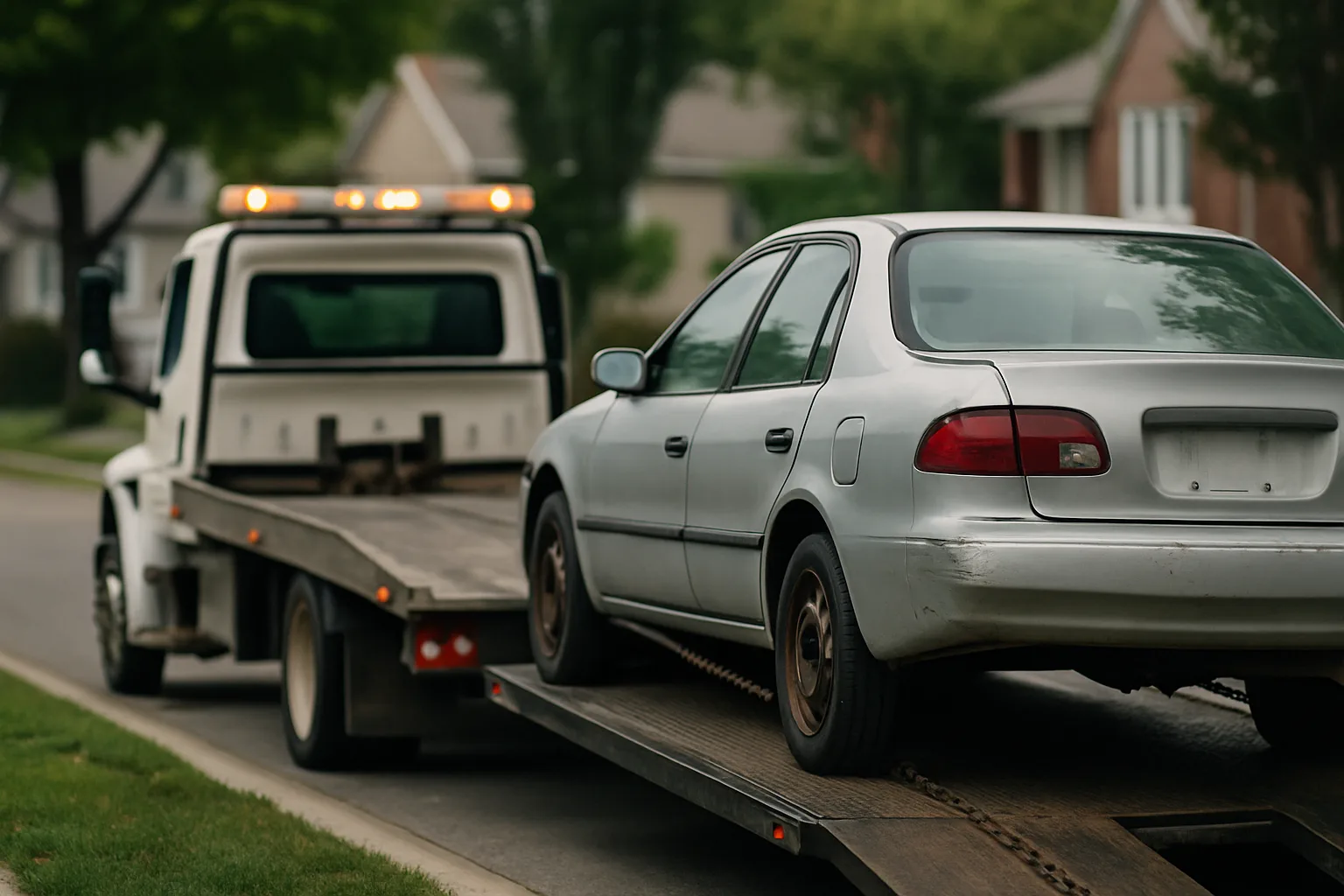
Junkyard, Salvage Yard, or Auto Recycler — What's the Difference (and Why It Matters in Quebec City)?
Most people use these three terms interchangeably. That's a mistake that can cost you money when you're trying to get rid of an end-of-life vehicle. If you're searching for free scrap car pickup in Quebec City, understanding the difference between a junkyard, a salvage yard, and a licensed auto recycler isn't just trivia — it determines how much you get paid, how legally protected you are, and whether your vehicle gets processed responsibly.
Here's the plain-language breakdown, specific to how these operations work in Quebec City and across the province of Quebec.
What Is a Junkyard? (And Why the Term Is Mostly Outdated)
The word "junkyard" is largely a holdover from an earlier era of vehicle disposal. Traditionally, a junkyard was a lot where old, damaged, or unwanted vehicles were stored — often outdoors, with minimal processing. Fluids weren't always drained. Parts weren't catalogued. Vehicles sat until they were crushed or stripped informally.
In 2026, operating a true junkyard in Quebec — one that ignores environmental regulations around fluid drainage, hazardous materials, and scrap handling — is largely illegal under provincial environmental guidelines enforced by the Ministère de l'Environnement, de la Lutte contre les changements climatiques, de la Faune et des Parcs (MELCCFP). That doesn't mean every informal operation has disappeared, but buyers and sellers should be cautious. If someone offers to take your car for free but can't tell you how they'll dispose of it, that's a red flag.
The key takeaway: if you're arranging junk car removal in Quebec City, avoid any operation that can't provide documentation of how your vehicle will be depolluted and recycled.
What Is a Salvage Yard? How It Differs From a Junkyard
A salvage yard is a step up from the old junkyard model — and it operates on a different business logic entirely. Where a junkyard was primarily about storage and disposal, a salvage yard is focused on parts recovery. Vehicles are inventoried, sometimes catalogued by VIN, and stripped for resale of usable components before the shell is scrapped.
Salvage yards are buyers first. They purchase vehicles specifically because they see recoverable value in the parts — engines, transmissions, catalytic converters, doors, trim, electronics. What you get paid (if anything) depends heavily on what your specific vehicle contains that they can resell.
Here's how the typical salvage yard transaction plays out:
- You call or fill out a form with your vehicle's year, make, model, mileage, and condition.
- The yard looks up demand for parts from that vehicle.
- They make an offer — sometimes nothing, sometimes a few hundred dollars.
- You accept or walk away. There's often no room to negotiate.
- They may or may not provide towing.
The problem with the salvage yard model for most vehicle owners is opacity. You're dealing with a single buyer who sets their own price. You have no visibility into what your car is actually worth on the open market. That's where a platform like SMASH Recycling changes the dynamic — instead of one buyer making a take-it-or-leave-it offer, your load goes to competition.
What Is a Licensed Auto Recycler? The Standard You Should Demand
A licensed auto recycler is the most regulated, most accountable option in the vehicle end-of-life chain. In Quebec, licensed auto recyclers operate under provincial environmental standards and are required to follow a specific depollution process before any vehicle is crushed or shredded.
That process includes:
- Draining all fluids — motor oil, transmission fluid, brake fluid, coolant, power steering fluid, and fuel.
- Removing the battery — lithium-ion batteries from hybrids and EVs require special handling.
- Removing the catalytic converter — which contains platinum, palladium, and rhodium and has significant scrap value.
- Removing airbags for safe disposal or reuse.
- Draining air conditioning refrigerants under controlled conditions.
Only after depollution is the vehicle processed for metal recovery. This matters to you as a seller because licensed recyclers are accountable — they carry liability, they're inspectable, and they provide proper documentation when your vehicle is transferred. You get a clear title release and peace of mind that you're not on the hook for future environmental issues connected to that vehicle.
For free scrap car pickup in Quebec City, insisting on a licensed auto recycler isn't just good practice — it's the responsible choice. Free scrap car pickup across Canada from GetMyScrapCar connects you with licensed, accountable operators who follow the full depollution process.
Scrap Metal Prices and What They Mean for Your Vehicle's Value
Every end-of-life vehicle is ultimately a pile of recoverable material. The metal is the largest component by weight — a typical passenger car weighs between 1,300 and 1,800 kg, and about 65-75% of that is steel and iron. The rest includes aluminum (in wheels, engine blocks, and body panels), copper (in wiring harnesses and motors), and precious metals in the catalytic converter.
Scrap metal prices today fluctuate based on global commodity markets, so what your car is worth changes week to week. A few factors that affect your specific vehicle's value:
- Overall weight — heavier vehicles contain more steel.
- Aluminum content — newer vehicles and trucks often use more aluminum, which commands a higher price per kilogram than steel.
- Catalytic converter condition — cats from certain models carry significantly more value than others.
- Parts demand — if a salvage yard still sees usable parts, your offer goes up.
- Current steel and non-ferrous pricing — tied directly to market conditions at the time you sell.
Disclaimer: Scrap metal prices fluctuate constantly based on market conditions. Always check current rates before committing to a sale. The figures used here are general ranges for reference only.
The challenge most Quebec City vehicle owners face is that they have no benchmark. When one buyer tells you your car is worth $200, how do you know if that's fair? You don't — unless you have competition. That's the core problem that platforms like SMASH are built to solve. The SMASH scrap metal auction model creates real price discovery by putting your load in front of multiple vetted buyers at once, rather than accepting the first number someone throws at you.
Which Option Makes the Most Sense for Quebec City Vehicle Owners?
If your vehicle still runs and has resale value, a private sale is likely your best option. But if your car is at end of life — damaged, failed safety inspection, too costly to repair — then you're looking at salvage or recycling. Here's how to think through it:
Go with a licensed auto recycler if:
- Your vehicle is completely stripped of value or heavily damaged.
- You want the simplest, most environmentally responsible process.
- You need proper documentation for title transfer and deregistration.
Consider a salvage yard if:
- Your vehicle has specific in-demand parts (rare trim levels, low-mileage drivetrains, hard-to-find components).
- You're comfortable negotiating and want to explore parts value before scrapping.
Use a platform like SMASH if:
- You want competition driving your price instead of one buyer's gut feeling.
- You're a dealer or yard moving volume and want transparent auctions.
- You want documented transactions with vetted buyers, not informal handshake deals.
For individual vehicle owners in Quebec City, the practical path is straightforward: Quebec City scrap metal services through GetMyScrapCar connect you directly with the right operator for your situation, with free towing included.
How to Prepare Your Vehicle — Regardless of Which Route You Choose
Before your vehicle leaves your driveway, there are a few steps every Quebec City vehicle owner should take. These protect you legally and ensure you get the most out of the transaction.
- Remove personal belongings. Check under seats, in the trunk, in the glovebox. People lose documents, tools, and valuables every time a car gets towed away.
- Remove your license plates. In Quebec, plates belong to the owner, not the vehicle. Return them to the SAAQ or transfer them to your next vehicle.
- Notify your insurer. Cancel or transfer your insurance the day the vehicle is picked up. You don't want to keep paying premiums on a car you no longer own.
- Get a receipt or bill of sale. Any legitimate licensed recycler or salvage yard will provide one. This protects you if issues arise later.
- Know your vehicle's weight and key specs. Year, make, model, trim, and mileage all affect your quote. Have this ready before you call.
None of this is complicated, but skipping these steps creates headaches. Take twenty minutes to do it right and read more junk car removal guides to stay informed about the full process.
When you're ready to move, the process doesn't have to be stressful. Schedule your free scrap car removal with GetMyScrapCar, get a fair quote based on real market conditions, and let a licensed recycler handle the rest — towing included, paperwork handled, no subscription fees on the platform side.
Frequently Asked Questions
Q: Is free scrap car pickup in Quebec City actually free, or are there hidden fees?
Legitimate services offering free scrap car pickup in Quebec City include free towing at no charge to you. The cost of removal is covered by the scrap value of the vehicle. Always confirm in writing that towing is included before agreeing to any pickup. Reputable operators won't spring surprise charges after the fact.
Q: How do I know if my scrap car quote in Quebec City is fair?
The best way to verify fairness is to get more than one quote. A single buyer has no incentive to offer you a competitive price. Platforms that bring competition into the process — like the SMASH scrap metal auction model — give you better price discovery than any single phone call can. Know your vehicle's weight and check general scrap steel prices as a baseline.
Q: Do I need to drain the fluids before junk car removal in Quebec City?
No. A licensed auto recycler handles full depollution as part of their regulated process. You do not need to drain oil, coolant, or fuel yourself. In fact, attempting to drain fluids improperly can create environmental and safety hazards. Leave it to the licensed professionals and confirm your recycler follows Quebec's depollution standards.
Q: What happens to my license plates when I scrap my car in Quebec?
In Quebec, license plates are the property of the vehicle owner, not the vehicle. When your car is picked up, remove the plates yourself beforehand. You can return them to the SAAQ, transfer them to a new vehicle, or dispose of them according to SAAQ guidelines. Do not leave plates on a scrapped vehicle.
Q: How long does the scrap car pickup process take in Quebec City?
Most pickups in Quebec City are arranged within one to three business days of accepting a quote, depending on operator availability and your location. The actual pickup typically takes under an hour. Payment is usually processed the same day as pickup. GetMyScrapCar works to keep the process as fast and straightforward as possible from quote to tow-away.
If your old vehicle is taking up space and costing you money in insurance you don't need, now is the right time to act. Get a free quote for your scrap car — schedule free pickup at getmyscrapcar.ca and put that metal to work instead of letting it rust in your driveway.
Stay current on scrap metal market trends and industry updates by following SMASH on LinkedIn.