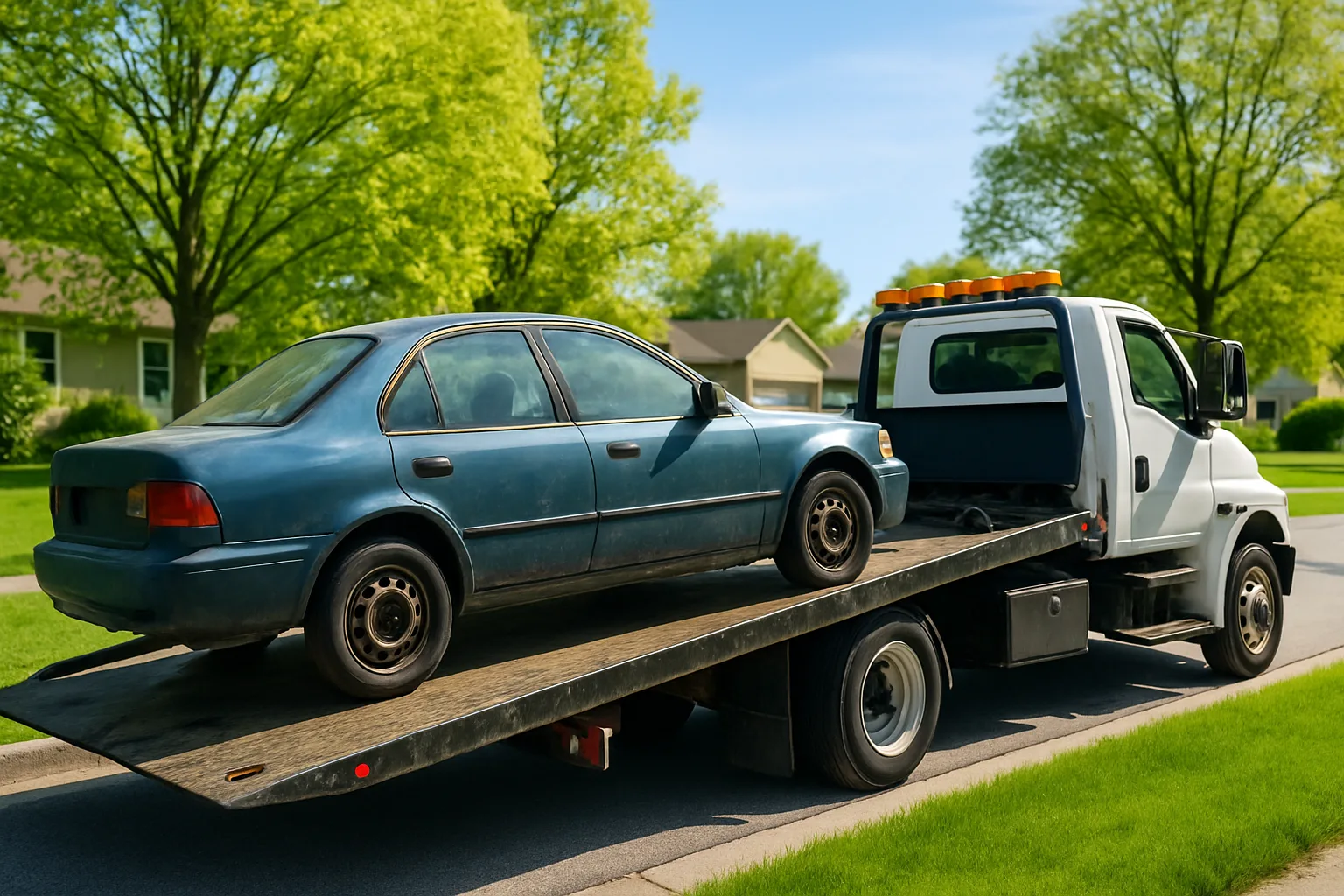
That rusting truck sitting in your driveway in Nanaimo isn't worthless — but bad information might be making you treat it like it is. Myths about junk car removal Nanaimo owners repeat to each other keep real money on the table every single day. If you've been putting off dealing with your end-of-life vehicle because of something you heard from a neighbour or read on a forum five years ago, this article is for you.
Let's break down the five most stubborn myths in the scrap car world — and replace them with what's actually true in 2026.
---Myth #1: Your Junk Car Has No Real Value
This is the biggest one. People look at a car that won't start, has a blown transmission, or has been sitting on blocks since last winter and assume it's basically garbage. It isn't. A non-running vehicle is still made of steel, aluminum, copper, and other recoverable materials that auto recyclers and scrap yards actively want.
Beyond raw metal weight, your vehicle likely has components with real market value:
- Catalytic converters — These contain platinum, palladium, and rhodium. Depending on your vehicle's make and model, a single cat can be worth hundreds of dollars. The ability to sell catalytic converters online through verified platforms means you're not limited to whatever a local yard feels like offering that day.
- Wheels and tires — Steel rims and even worn rubber have scrap value.
- Engine components — Alternators, starters, and copper wiring all get recovered and resold.
- The body steel itself — A mid-size car can weigh 1,400 to 1,800 kg. At current steel prices, that bulk alone accounts for a meaningful portion of what you get paid.
Platforms like find the best price for your scrap in Canada exist precisely because your car has value — and competitive bidding helps make sure you're not the last one to know what that value actually is. SMASH scrap connects sellers with vetted buyers who compete for your load, which is a fundamentally different experience than calling one yard and accepting their first number.
---Myth #2: You Need a Running Car to Get Paid
This myth convinces people to spend money getting a junker "running enough" before they call a scrap service — which is completely backwards. The whole point of junk car removal is that someone comes to you, picks up the vehicle in whatever condition it's in, and pays you. Running or not. Flat tires or not. Missing doors or not.
Legitimate scrap car services in British Columbia — including the ones you reach through free scrap car pickup across Canada from GetMyScrapCar — handle non-runners constantly. A flatbed or a wheel-lift truck is standard equipment for this industry. You don't need to worry about whether the vehicle starts, whether it can be steered, or whether all four wheels are on it.
What you do need:
- Proof of ownership (your vehicle registration or title)
- Photo ID
- The vehicle physically accessible (not buried under five other cars in a field)
That's it. The condition of the vehicle determines its price — but it doesn't determine whether the pickup happens. Cash for cars British Columbia services are built around taking vehicles exactly as they sit.
---Myth #3: All Scrap Car Services Pay the Same
This one is dangerously wrong, and it's why some people walk away from a transaction feeling cheated without quite knowing why. If you call one buyer, accept one number, and schedule a pickup without shopping around — you've chosen to skip price discovery entirely. That's a choice that costs real money.
The scrap car value today is not a fixed number. It moves with global steel prices, local demand, what a specific buyer's inventory looks like, and what components your specific vehicle has. A 2009 F-150 and a 2009 Civic have different values to different buyers for different reasons.
This is why the auction model matters. When multiple vetted buyers compete for your vehicle — which is exactly what SMASH is built to do — you get actual market price instead of whatever the first person you called decided to offer. More buyers means better price discovery. That's not a sales pitch, that's just how markets work.
Whether you're in Nanaimo or anywhere else in Canada, the principle is the same: one call, one offer is almost never your best outcome. Read more junk car removal guides on the GetMyScrapCar blog to understand how pricing actually works and what you can do to improve your position before you sell.
---Myth #4: Junk Car Removal Is a Hassle — Paperwork, Towing, Back-and-Forth
The old version of this process was legitimately annoying. You'd call a yard, get a vague number over the phone, wait for someone to show up with a tow truck in a four-hour window, argue about the vehicle's condition on arrival, sign paperwork you didn't fully understand, and hope the cheque didn't bounce. That experience gave the industry a reputation it's still shaking off.
In 2026, the process is fundamentally different when you use the right services. Here's what a modern junk car removal near me experience actually looks like:
- Submit your vehicle details online — make, model, year, condition, location, photos if you have them.
- Receive your offer — through a competitive process, not a gut-feel number from a single buyer.
- Schedule free pickup — at a time that works for you.
- Get paid — at the time of pickup or shortly after, depending on the arrangement.
That's it. No mystery, no back-and-forth about condition, no showing up three days late. Schedule your free scrap car removal and see how different the experience is from what the myth describes. Nanaimo and the surrounding Vancouver Island area are well-served by pickup services — geography isn't an excuse to keep that car sitting in your driveway.
---Myth #5: You'll Get More Money Parting It Out Yourself
This myth is technically true in a narrow set of circumstances — and dangerously misleading in most others. Yes, if you have a rare vehicle with high-demand parts, the mechanical skills to remove them safely, storage space to hold inventory, time to photograph and list everything, and patience to deal with buyers cancelling at the last minute — then parting out might yield more money total. Maybe.
For the vast majority of people, the math doesn't work out that way. Consider what parting out actually costs you:
- Time — Listing individual parts, answering messages, coordinating pickups. A full part-out can take weeks or months.
- Tools and space — You need somewhere to do the work and the right equipment to do it safely.
- Liability — Once that transmission is in someone else's car, any problems become your problem.
- The remainder — When you're done, you still have a shell to deal with, and a stripped hulk gets paid less at the scrap yard, not more.
For most people, getting a fair market price through a competitive offer process — understanding your scrap car value ontario or British Columbia equivalent before you sell — beats the part-out math once you account for your own time honestly. Platforms like SMASH make it possible to get that competitive price without turning your driveway into a chop shop for three months.
If the catalytic converter is your main concern, that's worth understanding separately. Cats can be tracked by VIN and serial number, and selling through verified channels protects you legally and financially. Don't just yank it and sell it to the first person who DMs you on a forum.
---What a Real Scrap Car Sale Looks Like in Nanaimo
Let's make this concrete. Say you've got a 2012 Honda CR-V sitting behind your place in Nanaimo. It was rear-ended two years ago, the repair cost more than the car is worth, and it hasn't moved since. You've been ignoring it because you assumed the payout wouldn't be worth the effort.
Here's reality: that CR-V still has a catalytic converter, a set of wheels, recoverable aluminum, and a steel body. It has weight. It has value. A vetted buyer who knows what they're doing will price that vehicle based on its actual recoverable content — not based on what they think you'll accept.
The Nanaimo scrap metal services available through GetMyScrapCar connect you to exactly that kind of buyer. No guessing, no single lowball offer from whoever answered the phone. Submit the vehicle, let competition do its job, schedule pickup, get paid. That CR-V stops costing you space and starts putting money in your pocket.
British Columbia vehicle owners have real options in 2026. The scrap market is active. Buyers are competing. You just have to stop believing the myths that are keeping you from participating in it.
When you're ready to stop guessing and start selling, get a free quote for your scrap car in Canada and schedule your free scrap car removal at getmyscrapcar.ca. The process is faster and simpler than the myths suggest — and the payout is almost always better than doing nothing.
---Frequently Asked Questions
Q: How much is my junk car worth for scrap in Nanaimo?
Scrap car value depends on the vehicle's weight, metal composition, condition, and current commodity prices. A typical passenger car in the 1,200–1,800 kg range has meaningful scrap value, and components like catalytic converters can add significantly to that total. The best way to know your actual value is to get a competitive offer rather than relying on a single buyer's estimate. Prices fluctuate — check current rates before you commit.
Q: Do I need a title to scrap my car in British Columbia?
Yes. In British Columbia, you need to provide proof of ownership — typically your vehicle registration — to legally transfer a vehicle to a scrap buyer. This protects you as the seller and is required by law for licensed auto recyclers. If you've lost your documents, ICBC can help you get duplicates before you proceed.
Q: Is junk car removal in Nanaimo actually free?
Most legitimate scrap car removal services in Nanaimo offer free towing as part of the transaction. The cost of pickup is factored into the offer rather than charged separately. Always confirm this upfront — a reputable service won't surprise you with towing fees at the door.
Q: How long does the junk car removal process take?
From first contact to completed pickup, most transactions take one to three business days for straightforward cases. Remote locations or vehicles in difficult-to-access situations may take longer to schedule. The paperwork and payment process at pickup itself usually takes under 30 minutes.
Q: Can I sell a scrap car that's not in my name?
No — you must be the registered owner or have documented legal authority to sell the vehicle. Selling a car you don't own, even a junker, creates serious legal exposure for everyone involved. If the vehicle belonged to a deceased family member, you'll need to work through the estate process before selling.
---Follow SMASH on LinkedIn for ongoing scrap metal market insights, industry updates, and tips for getting the most out of your next sale.