What Happens to Your Flood-Damaged or Fire-Damaged Car — And How to Get Paid for It
A flood or fire doesn't just wreck a car — it creates a paperwork nightmare on top of the mechanical one. Insurance adjusters, total loss declarations, salvage titles, and towing logistics all hit at once. If you're sitting on a damaged vehicle in Coquitlam or anywhere across British Columbia, the good news is this: that car still has real value, even if it never runs again. The key is knowing how to move it — and who to call.
Junk car removal in Coquitlam has become a practical option for owners dealing with exactly this situation. Flood cars. Fire cars. Vehicles that insurers wrote off and left in your driveway. Let's break down what you need to know in 2026 — the regulations, the value, and the fastest way to turn a disaster into cash.
Why Flood and Fire Vehicles Are Still Worth Real Money
Here's what most vehicle owners don't realize: a car that can't be driven is still a car made of steel, aluminum, copper wiring, and catalytic converter metals. A typical passenger vehicle weighs between 1,400 and 1,900 kilograms. Even at scrap metal values, that weight adds up fast — especially when you factor in the non-ferrous components like copper harnesses, aluminum engine blocks, and the platinum-group metals inside your catalytic converter.
Fire-damaged vehicles often retain more of their high-value components than flood cars do. A fire that starts in the cabin may leave the engine bay, drivetrain, and undercarriage largely intact. Flood vehicles, on the other hand, can suffer deep corrosion and electrical damage — but the steel body, wheels, and frame still carry scrap weight.
- Catalytic converters on flood or fire cars are frequently undamaged and carry significant value
- Aluminum engine blocks and transmission housings are recyclable regardless of vehicle condition
- Steel frame and body panels are weighed and priced at current scrap steel rates
- Copper wiring from intact sections of the vehicle adds non-ferrous value to the overall load
The actual payout you receive depends on current market rates for these metals — and those rates move. If you want to understand your scrap car value today, the best move is to get a current quote rather than rely on a number you heard six months ago. Platforms like sell your scrap metal on SMASH Recycling give you visibility into what the market is actually paying — not what one buyer feels like offering.
British Columbia Regulations for Scrapping a Total Loss Vehicle in 2026
If your vehicle was declared a total loss by your insurer, ICBC will typically issue you a salvage title or retain ownership depending on your settlement. In British Columbia, vehicles that have been written off are classified under the Salvage or Irreparable branding system administered through ICBC and the Vehicle Sales Authority. As of 2026, this system means your car may carry a branded title — and that affects how you can legally transfer or scrap it.
Here's what that means practically:
- Salvage-branded vehicles can be repaired and re-registered if they pass inspection — but most flood and fire write-offs don't make it through that process economically.
- Irreparable-branded vehicles cannot be driven on public roads again. They can only be used for parts or scrapped entirely.
- When scrapping either type, you'll need to transfer or surrender the vehicle documentation to the recycler or auto dismantler. In most cases, legitimate scrap car buyers handle this for you.
One question we hear often: what if I don't have the title or registration anymore? Flood and fire events sometimes destroy documents along with the vehicle. The answer: reputable junk car removal services deal with this regularly. Many will work with a statutory declaration or direct ICBC confirmation of ownership. You're not necessarily stuck — but be upfront about what documentation you have when you call.
There's also been increased enforcement in 2026 around unlicensed auto dismantling in the Lower Mainland. Make sure the buyer you use is a licensed recycler. This protects you from liability if anything goes sideways after the vehicle leaves your property.
What to Expect During the Junk Car Removal Process in Coquitlam
If you've never scrapped a vehicle before, the process is more straightforward than most people expect. Here's how it typically goes when you book free scrap car pickup across Canada from GetMyScrapCar:
- Get a quote. You describe the vehicle — year, make, model, condition. For damaged cars, be honest about the extent of the damage. Flood cars with seized engines are valued differently than fire cars with intact drivetrains.
- Schedule pickup. Most reputable services offer free towing and can get to you within 24–72 hours in the Coquitlam area.
- Prepare your documents. Have whatever paperwork you have ready — title, ICBC total loss letter, or registration. If your documents were damaged, explain this when you book.
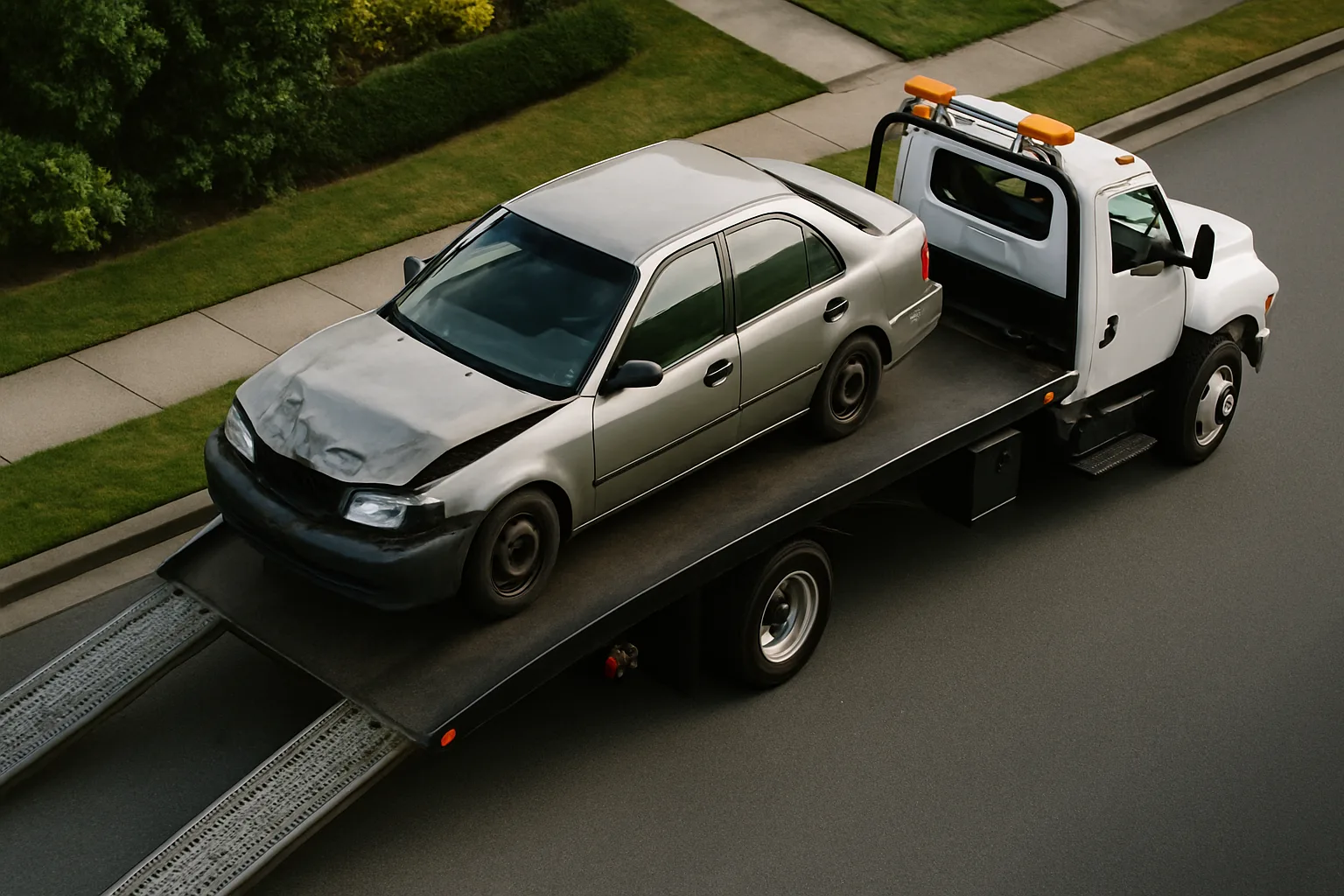
- Vehicle is picked up. A flatbed or tow truck comes to your location. You hand over the keys and documentation.
- Payment. Most services pay on pickup or within a day or two via e-transfer or cheque.
For flood or fire vehicles specifically, take photos of the damage before pickup. This protects you and gives the buyer accurate information to price the load correctly. A few photos on your phone takes two minutes and prevents disputes later.
Cash for Cars With No Title or Registration — Does It Work in BC?
Short answer: yes, in many cases. The cash for cars no title no registration question comes up constantly — especially with flood events where documents are lost or destroyed, or with older vehicles where paperwork was never kept organized.
In British Columbia, a licensed auto recycler can accept a vehicle without a title if you can demonstrate ownership through other means. That might include:
- A statutory declaration signed in front of a notary public
- An ICBC letter confirming the settlement and total loss status
- Previous registration documents or insurance records showing your name
- A combination of supporting documentation that establishes the chain of ownership
The process varies by recycler. When you contact a service for cash for cars British Columbia, ask upfront what they need if documentation is missing or damaged. A legitimate operation will tell you exactly what's required — they deal with this routinely. If a buyer shrugs off documentation entirely with no process whatsoever, that's a red flag.
If you're unsure where to start, you can also read more junk car removal guides to understand your options before you make any calls.
How SMASH Helps Yards and Buyers Get Better Value on Damaged Vehicle Loads
Here's something most individual sellers don't think about: the facility that buys your scrap car doesn't keep it whole. They strip it, sort the metals, and sell those materials into the broader scrap market. That means the price your recycler pays you is directly tied to what they can recover when they sell scrap metal online or through a broker or auction platform.
This is where SMASH scrap enters the picture. SMASH is a B2B scrap metal auction platform that connects recycling yards with vetted buyers across North America. When a yard has a load of stripped catalytic converters, sorted non-ferrous, or shredder-ready auto bodies — SMASH puts that load in front of multiple buyers at once. Competition among buyers means better price discovery. Better price discovery upstream means recyclers can pay more competitive rates to vehicle owners downstream.
So when you're trying to understand your scrap car value today, what the scrap market is doing at the wholesale level genuinely affects your payout. SMASH gives recyclers a transparent, documented way to move material — which ultimately benefits the chain all the way back to the person handing over the keys. You can schedule your free scrap car removal and rest a little easier knowing the facility you're working with has competitive options for moving that metal.
Don't Let a Flood or Fire Vehicle Sit — The Cost of Waiting
Every month a damaged vehicle sits on your property, it loses value. Metal corrodes further. Fluids leach into the ground — which in some municipalities creates liability. In Coquitlam and across the Lower Mainland, unsightly or derelict vehicles on private property can attract bylaw complaints. And in 2026, with metal markets moving the way they are, what's worth a certain amount today may not hold that same value three months from now.
There's no upside to waiting. The vehicle isn't going to heal itself. The paperwork doesn't get simpler with time. Book the pickup, get the quote, hand over the keys. Free towing is standard. You don't need to haul it anywhere or spend a dollar getting it off your property.
If you're ready to move forward, GetMyScrapCar offers free scrap car pickup across Canada with no subscription fees, no surprises, and no hassle with documentation you've already dealt with enough. Get a free quote today — it takes a few minutes and you'll know exactly where you stand.
Disclaimer: Scrap metal prices fluctuate based on market conditions. The value of your vehicle at time of pickup will reflect current rates. Always confirm pricing directly with your chosen buyer before finalizing.
Frequently Asked Questions
Q: Can I get cash for a flood-damaged car in Coquitlam even if it doesn't run?
Yes. Non-running vehicles are accepted regularly for junk car removal in Coquitlam. Scrap buyers value the vehicle by weight and recoverable metals, not by whether it starts. Free towing is typically included, so you don't need to move the car yourself.
Q: What documents do I need to scrap a fire-damaged vehicle in British Columbia?
Ideally, you'll have the vehicle's title and the ICBC total loss or write-off letter. If documents were destroyed in the fire, a licensed recycler can often work with a statutory declaration or other proof of ownership. Ask the buyer directly what they require before your appointment.
Q: How long does junk car removal in Coquitlam take?
Most services can schedule pickup within 24 to 72 hours once you've confirmed your quote and documentation. The actual pickup itself typically takes under an hour — a tow truck arrives, you hand over the keys and paperwork, and payment is arranged on the spot or within a day or two.
Q: Does my scrap car need to be driveable for pickup?
No. Junk car removal services use flatbed tow trucks for exactly this reason. Flood cars, fire cars, and vehicles with seized or missing engines are all picked up without issue. The condition of the vehicle affects its value, not whether the service will accept it.
Q: What is the scrap car value today for a flood-damaged vehicle in BC?
The value depends on the vehicle's weight, the extent of damage, and current scrap metal market rates — which change regularly. Catalytic converters, aluminum components, and steel body weight all factor in. Get a direct quote for an accurate number, and check current rates before accepting any offer. Prices fluctuate — never rely on a figure from weeks ago.
Stay current on scrap metal market trends and industry news by following SMASH on LinkedIn — it's one of the best free resources for understanding what's driving metal prices across North America right now.